
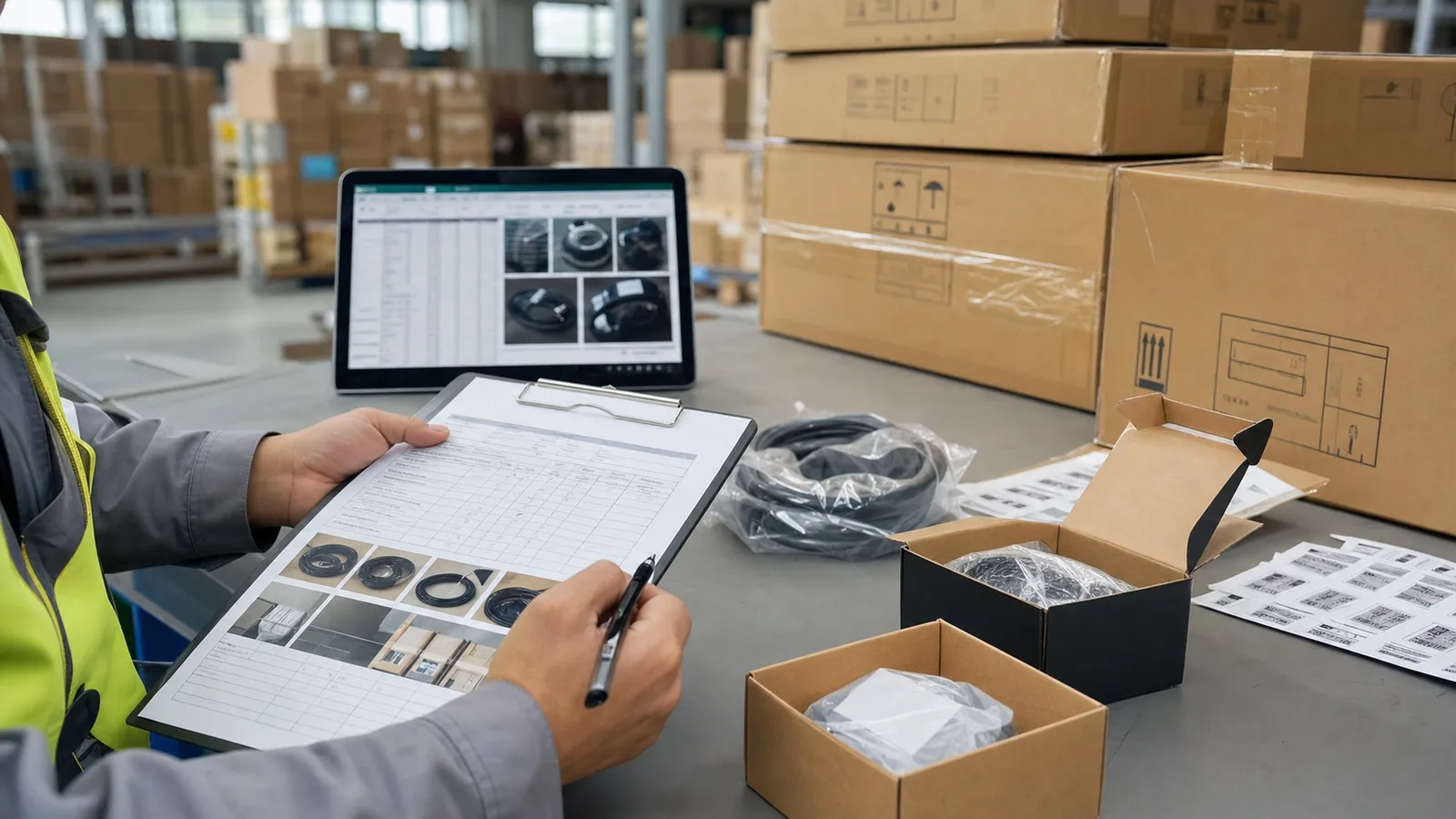
CBAM - supplier emissions data - EU shipment readiness

EU CBAM Supplier Data Check for China Sourcing in 2026

Written by Agent HuangPublished on June 30, 2026

China-side sourcing partner helping overseas buyers verify suppliers, inspect goods, and reduce payment or shipment risk before money or goods move.

The EU Carbon Border Adjustment Mechanism is no longer a future reporting topic. The definitive CBAM regime started on January 1, 2026, customs systems now validate CBAM authorisation and threshold status, and the European Commission lists China among the main origin countries for early CBAM-covered imports.

Before deposit, final payment, or pickup, EU buyers should confirm whether the exact product is in a CBAM sector, who owns the authorised declarant role, whether the 50-tonne threshold may be exceeded, and whether supplier installation, product, invoice, country-of-origin, emissions-data, verifier, default-value, and registry handoff records can be tied to the actual shipment. Huang Sourcing can organize China-side supplier and shipment evidence, but CBAM scope, authorisation, embedded-emissions calculation, verification, declaration, certificate surrender, customs entry, and legal compliance remain with the EU importer, indirect customs representative, verifier, adviser, broker, or counsel.

Quick answer

What should buyers check before EU-bound CBAM goods ship?

Check whether the exact product is in CBAM scope, whether the supplier can identify the actual production installation, whether emissions or default-value instructions are accepted by the EU-side owner, and whether invoice, packing, mass, origin, and registry handoff records match before cartons leave China.

1Confirm whether the exact product, CN code, and material are in a current CBAM sector before treating the shipment as covered
2Map iron and steel, aluminium, cement, fertilisers, hydrogen, and electricity exposure by SKU, component, bundle, and invoice line
3Name the EU-side authorised CBAM declarant, indirect customs representative, EORI owner, and release decision owner before final paperwork
4Track cumulative CBAM net mass against the 50-tonne threshold for the importer when applicable, instead of checking only one shipment
5Collect supplier installation name, operator details, production route, country of origin, production period, quantity, and product-level emissions data
6Confirm whether the importer plans to use actual verified emissions data, default values, or a mixed file and who will approve that choice
7Compare quote, product spec, supplier declaration, commercial invoice, packing list, carton labels, and product photos for the same CBAM goods
8Pause payment or pickup when product scope, origin, installation data, emissions file, verifier path, or EU registry handoff cannot be reconciled

China-side evidence module

EU CBAM supplier data checklist

The check is practical: scope the product, identify the actual producer, collect installation and emissions-data references, and package shipment evidence for the responsible EU-side CBAM owner.

Product and sector scope

  • Confirm product name, material, CN or HS code, sector, component set, SKU, invoice line, and whether the goods are in a current CBAM sector
  • Separate covered metal components, spare parts, kits, mixed-material goods, accessories, and packaging so the EU-side owner can decide scope

Supplier installation data

  • Collect supplier, producer, installation, production route, country of origin, production period, process, and quantity records by SKU or invoice line
  • Tie emissions statements, communication templates, O3CI registry records, and operator files to the actual production site and shipment lot

Importer handoff

  • Confirm authorised declarant status, EORI, indirect representative role, application reference, threshold tracking, customs release plan, and registry owner
  • Package invoice, packing, quantity, origin, CN code, and supplier evidence so the EU team can prepare annual declaration and certificate decisions

Verification and release

  • Ask whether actual emissions data needs accredited CBAM verification or whether default values will be used for the buyer decision
  • Flag late material substitutions, producer switches, invoice wording changes, unclear origin, or supplier refusal to provide installation data before pickup

Why CBAM is a current 2026 China sourcing issue

CBAM moved from transitional reporting into the definitive regime on January 1, 2026. The Commission says customs now enforces validation of CBAM authorisations before release for free circulation, including monitoring of the 50-tonne threshold. In the first January 2026 reporting window, China was listed among the main origin countries for CBAM-covered imports.

For China sourcing, the practical issue starts before EU customs entry. A buyer may approve a supplier, pay a deposit, release balance payment, or let the forwarder collect goods before product scope, CN code, installation data, origin, mass, emissions data, and EU declarant responsibilities are clear. Once the goods leave China, supplier leverage and correction options drop quickly.

  • The definitive CBAM period is active in 2026, not only a future compliance project
  • The first annual CBAM declaration and certificate surrender deadline for 2026 imports is September 30, 2027
  • The single mass-based 50-tonne threshold must be tracked by the EU-side importer or indirect representative when applicable
  • China-side evidence should be collected before payment or pickup, while supplier correction is still realistic

Start with product scope and invoice lines

CBAM currently focuses on cement, iron and steel, aluminium, fertilisers, electricity, and hydrogen. For many Huang Sourcing buyers, the likely questions are not whole steel coils or aluminium billets only. They are finished or semi-finished goods with metal content, parts, fasteners, housings, brackets, profiles, components, kits, or mixed-material products where the EU team needs exact product and CN-code facts.

The China-side file should separate what can be observed from what must be decided by specialists. Product photos, dimensions, material claims, model numbers, invoice wording, packing lists, quantity, net mass, country of origin, and supplier identity can be checked. CBAM legal scope, CN classification, and anti-circumvention analysis belong to the importer, customs representative, or qualified adviser.

  • Create a SKU-level table with product name, material, CN or HS code, unit weight, quantity, net mass, supplier, factory, and EU destination
  • Keep covered components and non-covered components separate when a shipment contains kits or mixed-material goods
  • Ask suppliers to revise vague invoice descriptions before final payment or pickup
  • Record who approved release when product scope is still under EU-side review

Supplier emissions data must connect to the actual producer

CBAM data should not be a generic sustainability PDF. The EU-side owner may need production-route, installation, operator, embedded-emissions, electricity, precursor, process, and quantity records connected to the producer that actually made the covered goods. A trading company, export agent, or final packer may not own that data.

A useful China-side check follows the production chain. It asks who made the covered goods, where the installation is, whether the supplier is willing to use the Commission communication template or registry pathway, and whether the data relates to the order being shipped rather than to an old sample, another buyer, or another plant.

  • Identify the actual production installation separately from the sales office, exporter, warehouse, and forwarder pickup point
  • Tie supplier emissions statements to the product, production period, process route, quantity, and country of origin
  • Flag files that describe company capability but not the actual goods in the shipment
  • Treat producer changes, subcontracting, or late material substitutions as a new release decision

Importer and registry handoff should be named before shipment

The Commission opened authorisation tools before the definitive regime and maintains registry modules for authorised declarants and non-EU installation operators. A China supplier may need the EU declarant EORI number or other instructions to share installation and emissions data through the relevant pathway. That cannot be solved reliably after goods are already moving.

The buyer should name the owner for authorised CBAM declarant status, indirect representation, threshold tracking, registry access, declaration preparation, certificate purchase and surrender, and customs release decisions. Huang Sourcing can help package the China-side evidence, but it should not become the decision-maker for EU registry or customs obligations.

  • Confirm whether the importer or indirect customs representative is responsible for the CBAM account, application reference, and EORI handoff
  • Keep threshold notes with the shipment file because one order may not show the importer annual picture
  • Ask the supplier which installation operator, parent company, or producer should upload or share emissions data
  • Preserve written EU-side release instructions when data gaps remain

Actual emissions, default values, and verification are different decisions

In the definitive period, the EU importer may declare embedded emissions using actual verified data or official default values, depending on the facts and current rules. The Commission verification page explains that actual emissions data needs independent verification by accredited CBAM verifiers, and that the first CBAM verifiers are expected to receive accreditation around September 2026.

That timing matters for supplier conversations in 2026. A supplier may claim actual emissions data is available, but the buyer still needs to know whether it is verified, who verified it, which installation it covers, whether it matches the product and production period, and whether the EU-side owner accepts it instead of default values.

  • Separate raw supplier data, completed communication templates, O3CI records, verification reports, and importer calculation files
  • Check whether actual emissions data belongs to the same installation and goods being shipped
  • Do not treat a supplier spreadsheet as verified CBAM data unless the EU-side owner confirms the verifier path
  • Document when the importer intentionally uses default values because actual verified data is missing or not accepted

Shipment paperwork should match the CBAM evidence file

The clean file is direct: product description, material, CN or HS code, supplier, production installation, country of origin, quantity, net mass, commercial invoice, packing list, carton labels, product photos, and emissions-data reference all describe the same goods.

When those records do not match, buyers should turn the mismatch into a payment or pickup decision. The practical choices are correction, re-check, split shipment, hold payment, ask the EU team to use default values, request specialist review, or release with named responsibility and documented residual risk.

  • Keep one evidence folder per SKU, supplier, production installation, and shipment lot
  • Photograph product labels, carton labels, pallet marks, and packing records that connect physical goods to documents
  • Ask for corrected invoice and packing-list drafts before goods leave the supplier
  • Record who approved release if product scope, origin, mass, or emissions-data gaps remain

Evidence to decision matrix

Turn CBAM supplier data into a payment or shipment decision.

Use this table to decide whether CBAM evidence is ready enough for deposit, final payment, supplier correction, specialist review, or a hold before pickup.

Risk node
Evidence basis
Buyer decision
Product scope is controlled
SKU, material, CN or HS code, sector, product photos, invoice line, quantity, net mass, country of origin, and EU destination are documented.
Proceed with CBAM data collection, rule the goods out of scope with qualified owner approval, or pause until scope is confirmed.
Actual producer is identified
Supplier, exporter, factory, production installation, operator, production route, production period, and shipment lot are separated in the file.
Request missing producer records, split uncertain SKUs, hold payment, or escalate before the shipment leaves China.
Emissions path is clear
Actual data, communication template, O3CI record, verification report, default-value plan, and importer calculation owner are named where relevant.
Send to the EU-side CBAM owner for approval; do not treat generic supplier files as automatic release evidence.
Importer handoff is ready
Authorised declarant, indirect representative, EORI, application reference, threshold owner, customs release owner, and registry workflow are named.
Approve pickup only when the responsible EU-side party confirms the file is enough for customs release and later declaration work.

Evidence basis for this advice.

This guide is based on official EU CBAM source context, then narrowed to product scope, supplier installation, emissions-data, registry, invoice, packing, and importer-handoff evidence that can be checked while goods are still in China.

  • Official European Commission CBAM overview, definitive-regime, registry, reporting, sector, legislation, verification, and January 2026 operational source context current to June 30, 2026.
  • Buyer-provided product list, SKU records, CN or HS notes, quote, purchase order, invoice draft, packing list, supplier declarations, importer instructions, and EU-side CBAM owner notes.
  • Physical product, label, carton, packing, weight, supplier, factory, installation, correction, and shipment-record evidence observed or collected in China.
  • Specialist guidance from the EU importer, authorised CBAM declarant, indirect customs representative, customs broker, verifier, emissions adviser, tax adviser, marketplace, or legal counsel when regulated decisions exceed visual evidence.

Official source context

Verify the rule, then check the supplier data.

These sources explain CBAM scope, the definitive regime, registry, reporting, sector pages, default values, and verification. They do not replace shipment-specific EU compliance, customs, tax, or legal advice.

What to send before the China-side CBAM evidence check.

Send product, supplier, invoice, mass, and EU responsibility notes so the report can compare physical evidence against the files the EU team expects to use.

  • Product list by SKU, model, material, component set, possible CBAM sector, CN or HS code, unit weight, quantity, net mass, carton count, and EU destination
  • Supplier English and Chinese names, exporter, production factory, actual producer, installation name, operator details, production route, country of origin, and production period
  • Quote, proforma invoice, purchase order, commercial invoice draft, packing list draft, product photos, label photos, carton photos, and any supplier product-page records
  • Importer or indirect representative instructions for authorised declarant status, EORI, application reference, 50-tonne threshold tracking, registry handoff, customs release, and annual declaration owner
  • Supplier communication templates, emissions statements, O3CI records, default-value plan, verification notes, verifier contact, and any calculation file accepted by the EU-side owner
  • Payment deadline, pickup deadline, split-shipment plan, and written rules for which CBAM issues should block release versus be documented for EU-side review

CBAM red flags before payment or pickup.

Pause when product scope, producer identity, emissions data, mass, origin, or EU handoff cannot be tied to the actual shipment.

  • The supplier uses a trading company file but cannot identify the actual producer or production installation for covered goods
  • The invoice description, CN or HS code, material, net mass, country of origin, or product photos do not match the buyer file
  • The importer does not know who owns authorised declarant status, EORI handoff, threshold tracking, registry access, or customs release approval
  • The supplier provides a generic sustainability certificate or emissions spreadsheet that is not tied to the product, installation, or production period
  • Actual emissions data is claimed but there is no accepted verification path, verifier record, communication template, or importer calculation owner
  • The supplier changes material, producer, factory, route, invoice wording, or packaging after the EU-side CBAM file has been prepared
  • Goods are released because one shipment is under 50 tonnes even though the importer has not checked annual cumulative CBAM mass
  • The supplier refuses product photos, packing-list drafts, weight evidence, installation identity, or correction photos before pickup

Scope limits

A China-side check is not CBAM compliance approval.

The report can show what was visible and provided before shipment. It cannot decide whether a product is covered, whether emissions data is legally sufficient, or whether customs will accept the entry.

  • Huang Sourcing can compare visible product, supplier, factory, carton, invoice, packing, weight, installation, and document evidence against buyer-provided references in China
  • Huang Sourcing does not decide CBAM legal scope, CN classification, authorised declarant status, customs release, embedded-emissions methodology, verification, certificate surrender, or legal compliance
  • A China-side evidence check cannot prove CBAM compliance, emissions accuracy, verifier accreditation, registry acceptance, customs acceptance, threshold status, certificate pricing, or market access
  • The EU importer, authorised CBAM declarant, indirect customs representative, customs broker, verifier, emissions consultant, tax adviser, marketplace, or counsel remains responsible for regulated decisions
  • Trading-company opacity, hidden subcontracting, missing installation records, old emissions data, mixed materials, sealed cartons, late substitutions, or supplier obstruction can limit report confidence
  • CBAM rules, implementing acts, guidance, thresholds, default values, verification practice, registry functions, and sector scope can change, so time-sensitive instructions should be reconfirmed before shipment release

Related next steps

Build CBAM evidence into the shipment decision.

Frequently asked questions

Does EU CBAM apply to products sourced from China?

It can. CBAM applies to covered goods imported into the EU in current sectors such as cement, iron and steel, aluminium, fertilisers, electricity, and hydrogen. Buyers should confirm product scope and CN classification with qualified EU-side owners, then check whether China-side goods and supplier data match that plan.

What changed for CBAM in 2026?

The definitive CBAM regime started on January 1, 2026. The Commission says customs now validates CBAM authorisation and threshold status before release for free circulation. For 2026 imports, the first annual declaration and certificate surrender deadline is September 30, 2027.

What is the 50-tonne CBAM threshold?

EU guidance describes a single mass-based threshold of 50 tonnes of CBAM goods for EU importers or indirect customs representatives, with important scope details and exceptions that the responsible EU-side party must confirm. A China-side shipment check should not replace importer-level annual threshold tracking.

What supplier data should be checked before shipment?

At minimum, buyers should collect product identity, CN or HS notes, quantity, net mass, origin, actual producer, installation details, production period, emissions-data path, verifier or default-value plan, invoice drafts, packing records, and EU importer handoff instructions.

Can Huang Sourcing confirm CBAM compliance?

No. Huang Sourcing can check China-side supplier, product, invoice, packing, carton, installation, and document evidence against buyer-provided references. CBAM legal scope, classification, authorisation, emissions calculation, verification, declarations, certificate surrender, and customs decisions remain with responsible EU-side parties.

Should buyers check CBAM evidence before final payment?

Yes, especially when goods include iron, steel, aluminium, cement, fertiliser, hydrogen, or other CBAM-risk lines. Once goods leave China, it is harder to get producer identity, installation records, corrected invoices, weight evidence, emissions files, or substitution explanations from the supplier.

Before EU-bound CBAM-risk goods leave China

Check product, producer, invoice, mass, and supplier data before shipment release.

Send the product list, CN notes, invoice drafts, packing records, supplier installation details, emissions files, and release deadline before final shipment approval.

Check CBAM Evidence Before Shipment