
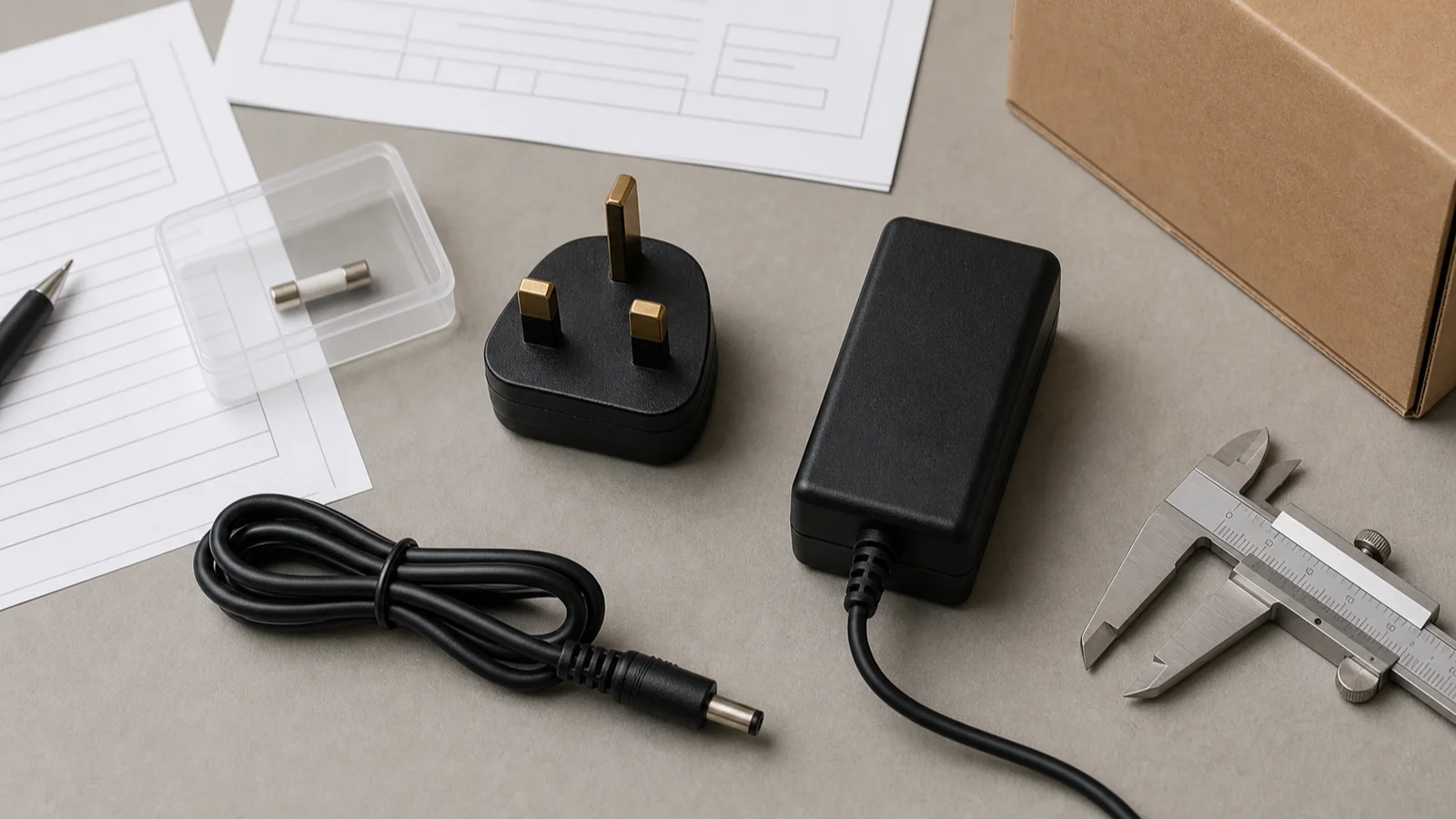
Quick answer
What should a buyer check before UK-bound electrical goods ship from China?
First get a qualified UK rule, standard, and test decision for the exact sales configuration. Then verify that the tested sample, reports, declarations, approved plug, adapter, fuse, cable, ratings, markings, manuals, physical packs, and cartons all describe the same production version before final payment or pickup.
China-side evidence module
UK plug and electrical-goods release checklist
This module connects specialist-approved technical references to the physical order. It does not turn an inspection into an electrical, destructive, or standard-conformity laboratory test.
Product and destination scope
- Product function, model, SKU, rated voltage and frequency, power, adapter or lead type, class, intended user, and Great Britain or Northern Ireland destination
- Qualified rule and standard map, importer responsibilities, conformity route, marking plan, test scope, and marketplace requirements
Plug, adapter, and fuse identity
- Approved plug body, pin geometry, sleeving, fuse type and rating, cable and strain relief, adapter housing, connector, and bill-of-material references
- Supplier, component maker, model code, drawings, golden sample, change-control status, production date, lot, and factory location
Technical file and markings
- Laboratory, report number, sample identity, tested configuration, standards, result, applicant, manufacturer, dates, photos, and amendment history
- Product and packaging ratings, model, batch or serial traceability, manufacturer and importer details, UKCA or CE decision, warnings, and instructions
Bulk order and release control
- Opened-carton coverage, plug and adapter revision checks, SKU and lot traceability, packing-list match, label and manual versions, and sampled measurements
- Affected quantity, segregation, approved correction, destructive-test needs, re-check result, payment hold, and forwarder pickup status
Why UK plug evidence is a current China sourcing issue
The September 4, 2026 OPSS recall of a China-origin candle warmer lamp adds a recent example of plug dimensions preventing a secure socket connection. The identified risk was overheating and fire. This update turns that finding into a shipment coverage record and a clearer component-replacement hold point.
A separate evidence stream comes from Which?’s June 11, 2026 laboratory investigation of 15 marketplace USB chargers. It reported nine with electric-shock risks, eight with fire and explosion risks, and missing required information across all 15. These are results for the tested samples, not a defect rate for all imports or a measure of market demand.
The practical decision is whether the approved plug, fuse, lead or adapter is actually the version packed for this order. Keep an unresolved mismatch open even when the appliance switches on. This guide uses public records and buyer-side sourcing analysis; it does not report a Huang Sourcing inspection of the cited products.
- A supplier photo of one correct UK plug does not prove that every carton contains that plug, fuse, adapter, cable, label, and manual revision
- A test report for a visually similar adapter may not cover a changed housing, transformer, PCB, insulation system, plug face, fuse, component supplier, or factory
- Visible markings or a UKCA or CE logo do not by themselves prove that the product passed applicable testing or has a complete technical file
- Correction leverage is strongest while replacement, segregation, retesting, relabeling, rework, cancellation, or delayed pickup remains practical in China
Current basis: OPSS September 2026 candle warmer recall and the Which? June 2026 charger investigation.
Which product, plug, and market configuration are being released?
Start with the complete sales configuration. A mains-powered product may use an integrated UK plug, an external power supply, a detachable lead, a bundled converter, or several destination variants under one listing. Record the end product and every mains-connected component, not only the outer appliance.
Great Britain and Northern Ireland can involve different market-access details. The importer, qualified UK product-safety adviser, approved body where applicable, and competent laboratory should decide the rules and conformity route. The China-side task is to document the exact configuration the supplier made and packed, then compare it with the buyer-approved technical and artwork references.
- Record model, SKU, destination, rated voltage and frequency, wattage, plug or lead arrangement, adapter input and output, connector, cable, fuse, and sales bundle
- Identify the manufacturer, importer or other responsible economic operator, factory, plug and adapter suppliers, production date, batch, and carton range
- Separate Great Britain, Northern Ireland, EU, U.S., and other destination variants in files, assembly areas, retail packs, and export cartons
- Reconfirm scope after a component, plug, fuse, PCB, transformer, housing, cable, supplier, factory, rating, label, manual, packaging, or sales-claim change
See the separate Great Britain and Northern Ireland documents in the OPSS electrical-equipment guidance.
How should test reports and technical files match the order?
Use the specialist-approved test plan as the reference. Compare the report applicant, manufacturer, factory, product model, adapter model, plug and fuse details, ratings, internal construction references, photographs, tested sample, standards, dates, results, and amendments with the purchase order and current production.
Do not treat a certificate title or report cover as enough. A controlled match requires the pages that identify the tested configuration and the evidence owner. If the order changed after testing, disclose the change and let qualified parties decide whether an engineering assessment, component evidence, amended file, or new testing is required.
- Keep the approved report, declaration, risk assessment, component schedule, drawings, label and manual files, and reference sample under revision control
- Check whether photographs and model identifiers in the report match the plug, adapter, cable, housing, ratings, and product now being produced
- Escalate missing pages, altered PDFs, unexplained model families, inconsistent applicants, mismatched factories, or reports outside the relevant scope
- Do not use supplier self-tests, continuity checks, plug photos, weight, or basic dimensions as substitutes for controlled electrical and conformity testing
Public evidence-match examples: OPSS PD-65W adapter report and OPSS WY-0601500360B plug report.
What can be checked on the physical plug and packed order?
A China-side inspection can compare visible construction and buyer-approved dimensions without claiming full BS 1363 conformity. The scope may include plug type, pin count and orientation, insulated sleeves, fuse presence and accessible marking, housing fit, cable entry, strain relief, connector, adapter model and ratings, label durability, manual, retail pack, and carton segregation.
Open cartons across the agreed sample and trace findings by SKU, lot, and carton. When a mismatch appears, stop assuming it is isolated. Define the affected range, segregate stock, obtain an approved correction instruction, and repeat the agreed checks after rework. Electrical or destructive tests stay with a competent laboratory.
- Compare physical samples with the buyer-approved golden sample, drawings, component list, label files, report photographs, and destination pack-out
- Record simple measurements only where the buyer or specialist has supplied the feature, tool, method, tolerance, and decision rule
- Check retail packs and cartons for loose travel converters, EU or U.S. leads, old adapters, mixed ratings, missing importer details, and incorrect manuals
- Photograph each sampled configuration in context and link every hold, correction, and re-check result to the affected quantity and carton range
Build one shipment coverage record per configuration
Use one row for each product SKU, destination, plug or adapter revision, and production lot. A single photograph of a UK plug should not close a multi-SKU order. The following is our recommended buyer worksheet, not a prescribed regulatory form.
For each row, record the approved component maker and model; drawing and sample revision; report pages identifying the tested configuration; fuse and cable references; production date and lot; retail-pack and manual revision; carton range and quantity; sampled carton numbers; findings; and the person authorized to close each finding.
Agree coverage before the inspection. If different lots use different component suppliers, make those differences visible in the sample plan. Record unopened or inaccessible stock explicitly. A sample can document the units checked; it cannot prove that every unobserved carton contains the same components.
- Missing report-to-model mapping: keep technical coverage open for the importer or laboratory to resolve.
- Wrong plug, fuse, lead or adapter in a sampled carton: identify the affected range and segregate it before authorizing replacement.
- Mixed old and new component revisions: retain separate lot and carton identities; do not merge them under one cleared SKU.
- Complete records and acceptable agreed observations: submit the identified scope to the buyer for a documented release decision.
What evidence closes a plug replacement or rework hold?
A supplier message saying “all plugs replaced” is not a release record. Obtain the approved replacement specification, component source, affected quantity, first and last carton numbers, rework instruction, completion record, and the qualified decision on whether the change affects existing safety evidence.
Keep removed parts and uncleared stock segregated. Re-inspect the corrected carton range against the approved replacement, then check ratings, labels, manuals and the packing list again. Record any cartons that were sealed, moved or unavailable; those limitations must remain visible in the buyer’s decision.
Do not bend, file or otherwise improvise changes to plug pins, substitute a different fuse rating, or accept a loose converter as an automatic fix. A fit trial in one socket is not a conformity test. Controlled electrical, dimensional and other safety testing belongs in the qualified test plan, not an improvised factory demonstration.
If goods have already been supplied, pass the issue promptly to the responsible importer and product-safety team. A shipment checklist does not replace their assessment of reporting, corrective action or recall responsibilities.