
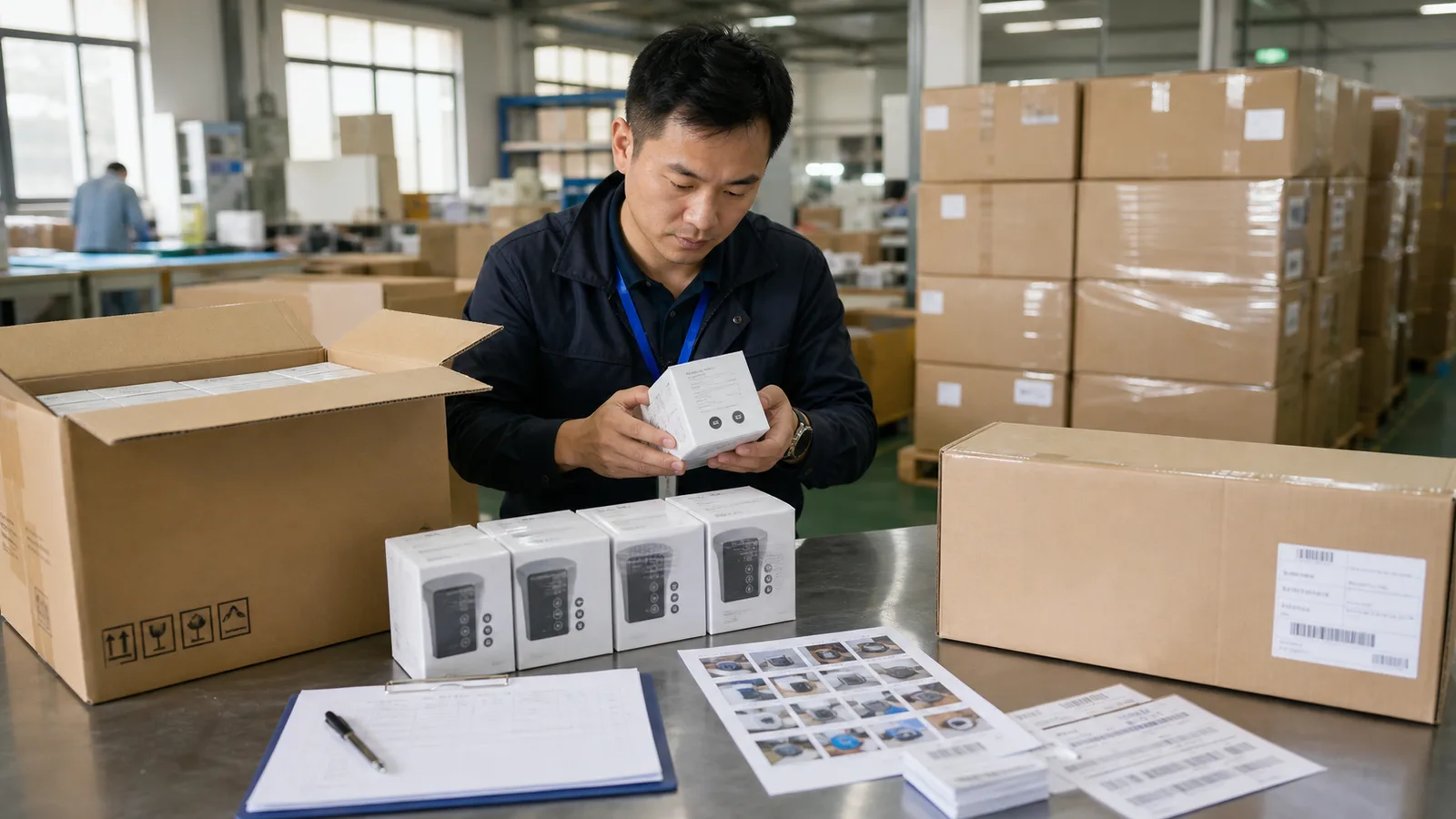
QC inspection China before balance payment

QC Inspection in China Before Balance Payment: What to Check

Balance payment is the moment when many buyers still have leverage. Once final payment is released, wrong labels, visible defects, missing accessories, weak cartons, or unclear packing become harder to fix. This guide explains what overseas buyers should check before paying the balance while the goods are still in China.

A useful QC inspection before balance payment should answer one practical buyer decision: pay, hold payment, request rework, sort the goods, re-inspect, or stop shipment release. The inspection should show what was checked, what was found, and what limits remain.

Written by Agent Huang | Published on May 21, 2026 | Updated on May 25, 2026

China-side sourcing partner helping overseas buyers verify suppliers, inspect goods, and reduce payment or shipment risk before money or goods move.

Quick answer

What should be checked before balance payment?

Check finished goods, defects, quantities, packaging, labels, cartons, documents, and shipment readiness before releasing the final payment. The point is to protect the buyer decision while supplier correction is still realistic.

1Finished quantity and carton count against the order
2Product appearance, workmanship, dimensions, color, logo, and visible defects
3Simple function checks when they are included in the agreed scope
4Accessories, manuals, inserts, spare parts, and set completeness
5Packaging, carton strength, carton marks, barcodes, and label placement
6FNSKU, carton labels, poly bag warnings, or SKU separation for Amazon-bound goods
7Packing list, commercial invoice, and shipment-readiness signals
8Defect photos and decision notes for payment, rework, sorting, or re-inspection

Why QC inspection before balance payment matters

Before balance payment, the supplier still has a reason to correct issues. After payment, the buyer often has less leverage, and every correction may compete with pickup schedules, warehouse space, and freight deadlines.

The inspection should not be a generic photo collection. It should focus on the defects, packaging issues, label mistakes, and shipment blockers that affect the buyer decision in front of you.

  • Release the balance only when evidence supports shipment approval
  • Hold payment when defects, missing items, or packing gaps are still unresolved
  • Request rework or sorting before goods leave the supplier
  • Schedule re-inspection when the correction affects a meaningful part of the order

What to check during QC inspection in China before balance payment

The exact checklist depends on your product, but the structure should stay practical: check what the supplier promised, what the buyer approved, what the shipment needs, and what would be expensive to fix after pickup.

For Agent Huang, the useful question is not whether one perfect sample looks good. The useful question is whether the bulk goods, cartons, labels, packing, and documents are consistent enough for the buyer to release the final payment.

  • Product condition: scratches, dents, stains, glue marks, poor finishing, wrong color, wrong logo, or visible workmanship problems
  • Specification match: size, material, color, model, version, accessories, manuals, packaging, and any approved sample notes
  • Quantity and cartons: finished quantity, carton count, packing method, mixed-SKU risk, and missing-carton signals
  • Packaging and labels: retail box, poly bag, warning labels, barcodes, carton marks, shipping marks, and label placement
  • Function checks: only the simple checks that were agreed before inspection and can be safely performed onsite
  • Shipment readiness: packing list, commercial invoice, carton condition, loading access, and pickup timing signals

Agent Huang field notes from the balance-payment stage

The most common problem is not a dramatic factory failure. It is a small mismatch that becomes expensive because nobody checked it before payment: a wrong barcode, an accessory missing from every box, cartons weaker than expected, or a logo printed in the wrong position.

Supplier photos often show the best-looking units. A buyer-side inspection needs wider context: sampled goods, carton rows, packaging details, label close-ups, defect examples, and a clear note about what was not checked.

  • Do not approve balance payment from close-up beauty photos only
  • Ask for carton-level evidence when packaging or labels affect the shipment
  • Treat missing accessories as an order issue, not a small packing detail
  • Keep the inspection scope honest when lab testing or destructive checks are required

Buyer decision table

What was checked and what the buyer can decide.

The inspection report should make the next action clearer. These are the common decision points before a supplier receives the final balance.

Risk node
What was checked
Buyer decision
Goods finished
Finished quantity, sampled units, visible workmanship, appearance, color, size, logo, and order-specific details
Pay balance, hold payment, or request rework before release
Packaging ready
Retail packaging, inserts, manuals, accessories, carton strength, carton marks, and packing method
Approve packing, require repacking, or sort affected cartons
Labels applied
Barcodes, FNSKU labels, carton labels, warning labels, SKU separation, and label placement
Approve pickup, relabel before pickup, or route through a prep warehouse
Defects found
Defect type, defect photos, approximate severity, affected samples, and whether the issue is correctable
Request repair, replacement, sorting, discount discussion, or re-inspection
Shipment release
Packing list, commercial invoice, carton count, warehouse readiness, pickup contact, and visible shipment blockers
Release goods, delay pickup, or escalate before freight is booked

Evidence basis for this advice.

This balance-payment guidance is based on product, packing, label, carton, defect, and document evidence that can still support a hold, rework, or release decision.

  • Purchase order, product specification, approved sample notes, packing requirements, label files, carton details, and balance-payment timing.
  • Finished-goods, defect, quantity, packaging, label, carton, and document evidence checked while the buyer still controls the balance payment.
  • China-side QC workflow judgment from connecting onsite findings to supplier correction, rework, sorting, re-inspection, or payment hold decisions.
  • Scope limits that separate visible QC evidence from legal certainty, hidden defects, laboratory testing, certification, or future supplier behavior.

What to send before QC inspection.

Better inputs create a better inspection. Send the requirements before the inspector arrives so the report can compare goods against your order.

  • Purchase order, pro forma invoice, and final product specification
  • Approved sample notes, product photos, and critical defect list
  • Factory address, supplier contact, and preferred inspection date
  • Packing list, carton count, carton label files, barcode files, and shipping marks
  • FNSKU files, shipment plan, and prep requirements for Amazon FBA orders
  • Balance payment deadline and the decision you need to make after the report

Red flags before releasing balance payment.

One warning sign may have an explanation. Several warning signs together usually mean the buyer should slow payment and ask for evidence.

  • The supplier asks for balance payment before showing full production or carton evidence
  • Photos show only a few perfect units and avoid bulk goods or cartons
  • Carton count, packing list, or label files are still changing near pickup
  • The supplier says packaging or label mistakes can be fixed after pickup
  • The supplier refuses buyer-side inspection or pushes to ship immediately
  • Test reports or certificates do not match the exact model or material being shipped

Scope limits

What QC inspection before balance payment cannot guarantee.

Honest scope limits make the report more useful. QC gives buyer-side evidence for a payment decision, not unlimited certainty.

  • QC inspection before balance payment reduces visible product, packaging, label, and shipment-readiness risk, but it does not remove every hidden issue
  • It does not replace laboratory testing, certification review, legal compliance, or customs advice
  • It does not guarantee defects outside the agreed sampling and inspection scope will be found
  • It does not guarantee Amazon receiving approval, marketplace listing approval, or customer review outcomes
  • It does not replace clear product specifications; vague requirements create vague inspection results
  • It does not resolve supplier disputes by itself, but it gives photo-backed evidence for the buyer decision

Frequently asked questions

When should I book QC inspection before balance payment?

Book it when production is finished or close enough that products, cartons, packaging, and labels are available to check before you release the final payment.

What should be checked before I pay the balance to a China supplier?

Check finished quantity, visible product defects, specifications, accessories, packaging, labels, carton marks, packing list, and shipment-readiness evidence before paying the balance.

Can Huang Sourcing check labels and packaging during QC?

Yes. Send barcode files, carton label requirements, packaging specs, and any FBA or marketplace prep rules before inspection so they can be included in the scope.

Does QC inspection replace lab testing?

No. QC inspection is a buyer-side onsite check for visible issues and agreed simple checks. Lab testing, certification, and regulated compliance review are separate scopes.

What if the inspection finds defects before balance payment?

Use the report to hold payment, request rework, sort affected goods, replace missing items, negotiate next steps, or schedule a re-inspection before pickup.

Before balance payment

Book QC before the supplier receives the final balance.

Send the product, factory location, carton count, deadline, and critical checkpoints. Agent Huang will help scope the inspection before payment release.

Book QC