
Quick answer
What should buyers confirm before pickup?
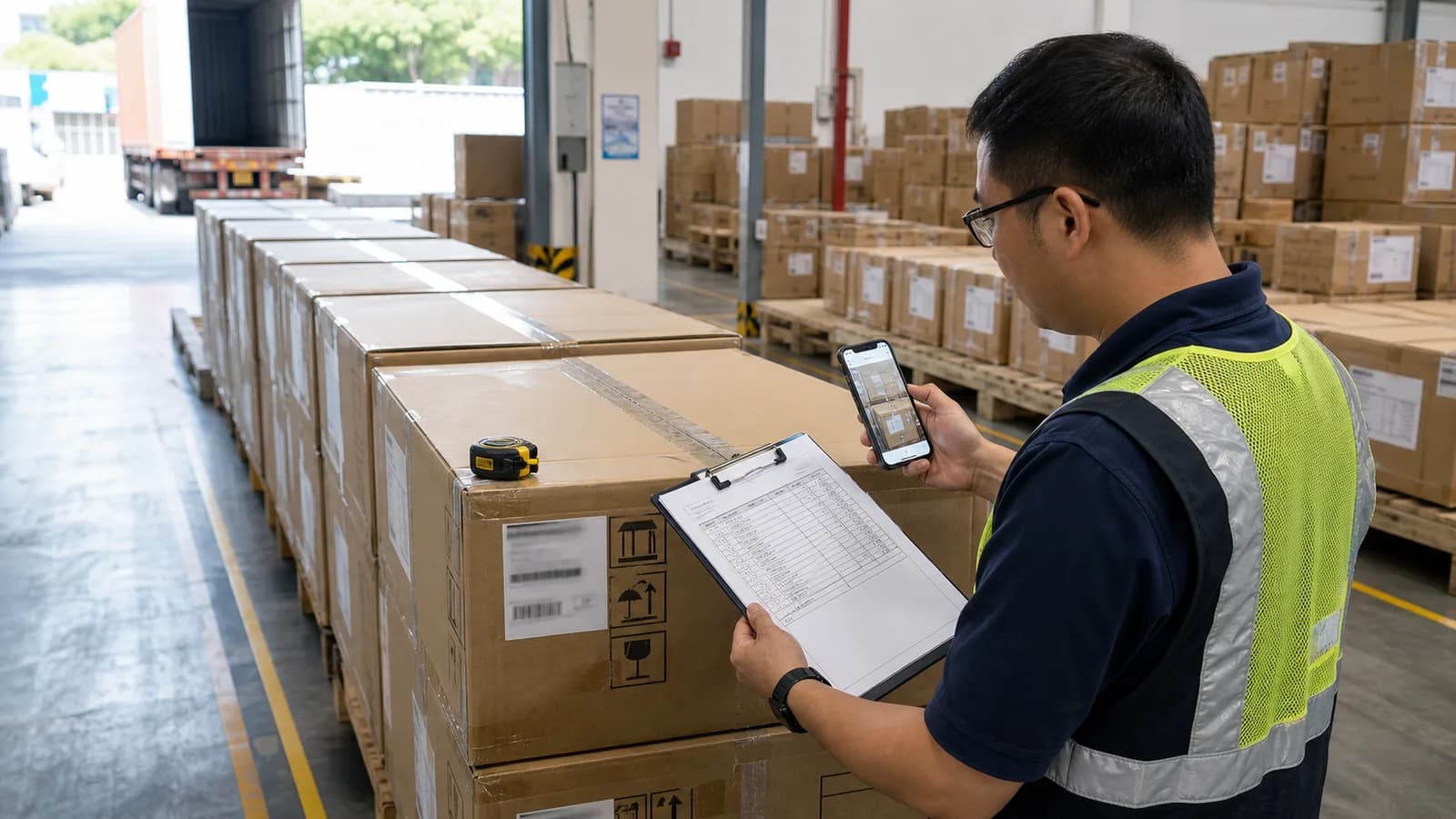
Before forwarder pickup, buyers should confirm cartons, labels, packing list, shipping marks, pickup address, loading window, and visible shipment-readiness evidence. If those signals do not match, delay pickup, request correction, or re-check before the goods leave the supplier or warehouse.
Should I release forwarder pickup after PSI?
Buyers should release forwarder pickup only when the PSI confirms cartons, labels, documents, and pickup details against the order evidence. If carton count, shipping marks, pickup address, or carton condition is still unclear, the practical decision is to delay pickup while the supplier can still correct visible shipment blockers.
Before pickup, the buyer still has a chance to stop the handover, ask the supplier to correct labels, replace damaged cartons, update documents, or confirm missing quantities. After pickup, every correction may involve warehouse fees, relabeling fees, freight delays, and arguments about who caused the problem.
- Release pickup when cartons, labels, documents, and loading details match
- Delay pickup when carton count, pickup address, or packing list is unclear
- Request correction when labels, marks, or carton condition create shipment risk
- Re-check when supplier corrections affect a meaningful part of the shipment
What buyers should confirm during pre-shipment inspection in China
Pre-shipment inspection in China should compare the packed shipment against the packing list, purchase order, label files, shipping marks, pickup address, and forwarder plan. The inspection should produce carton-level photos and notes that support a release, relabel, repack, hold, or re-check decision before goods leave supplier control.
Agent Huang looks for consistency between the packing list, actual cartons, labels, shipping marks, warehouse contact, and pickup plan. A clean product inspection can still become a bad shipment if the wrong cartons are handed to the forwarder.
- Carton count: actual cartons, units per carton, total quantity, missing cartons, and overpacked or underpacked cartons
- Carton condition: crushed corners, weak sealing, wet cartons, torn cartons, poor strapping, and damaged pallets
- Labels and marks: shipping marks, carton labels, SKU labels, barcodes, Amazon FBA labels, and label placement
- Documents: packing list, commercial invoice, supplier contact, forwarder contact, pickup address, and loading time
- Handover readiness: warehouse access, cartons staged for pickup, loading area, local delivery responsibility, and waiting-fee risk
- Shipment blockers: mixed SKUs, wrong labels, missing accessories, unfinished packing, or address changes without explanation
What does Agent Huang see in before-pickup checks?
Agent Huang treats before-pickup PSI as a handover-risk check, not a warehouse photo request. The useful evidence is whether the cartons staged for pickup match the buyer documents, labels, and forwarder plan. When the evidence does not reconcile, the pickup decision should slow down before goods leave the supplier.
A recurring before-pickup pattern Agent Huang sees is a supplier saying the shipment is ready while the packing list has just changed and only a few clean carton photos are shared. The buyer-side check is to compare the final carton count, shipping marks, carton labels, and staged-goods photos against the pickup plan. When the numbers or labels do not reconcile, the practical decision is to hold pickup or re-check after correction.
Supplier photos often show the cartons that look easiest to photograph. Buyer-side PSI should show the broader handover situation: carton rows, labels, damage examples, packing-list comparison, and whether goods are physically ready for pickup.
- Do not approve pickup from one clean carton photo
- Ask for carton-count evidence when the packing list changed recently
- Treat pickup address changes as a risk signal until explained
- Confirm labels before cartons leave the supplier, especially for FBA or multi-SKU shipments