
Quick answer
What should a buyer check before lithium-battery goods fly from China?
First have a trained dangerous-goods party classify the exact battery configuration and route. Then connect that decision to the battery identity, 2026 state-of-charge treatment, UN 38.3 evidence, physical packing, marks, carrier documents, and the cartons offered for pickup.
China-side evidence module
Lithium-battery air-shipment release checklist
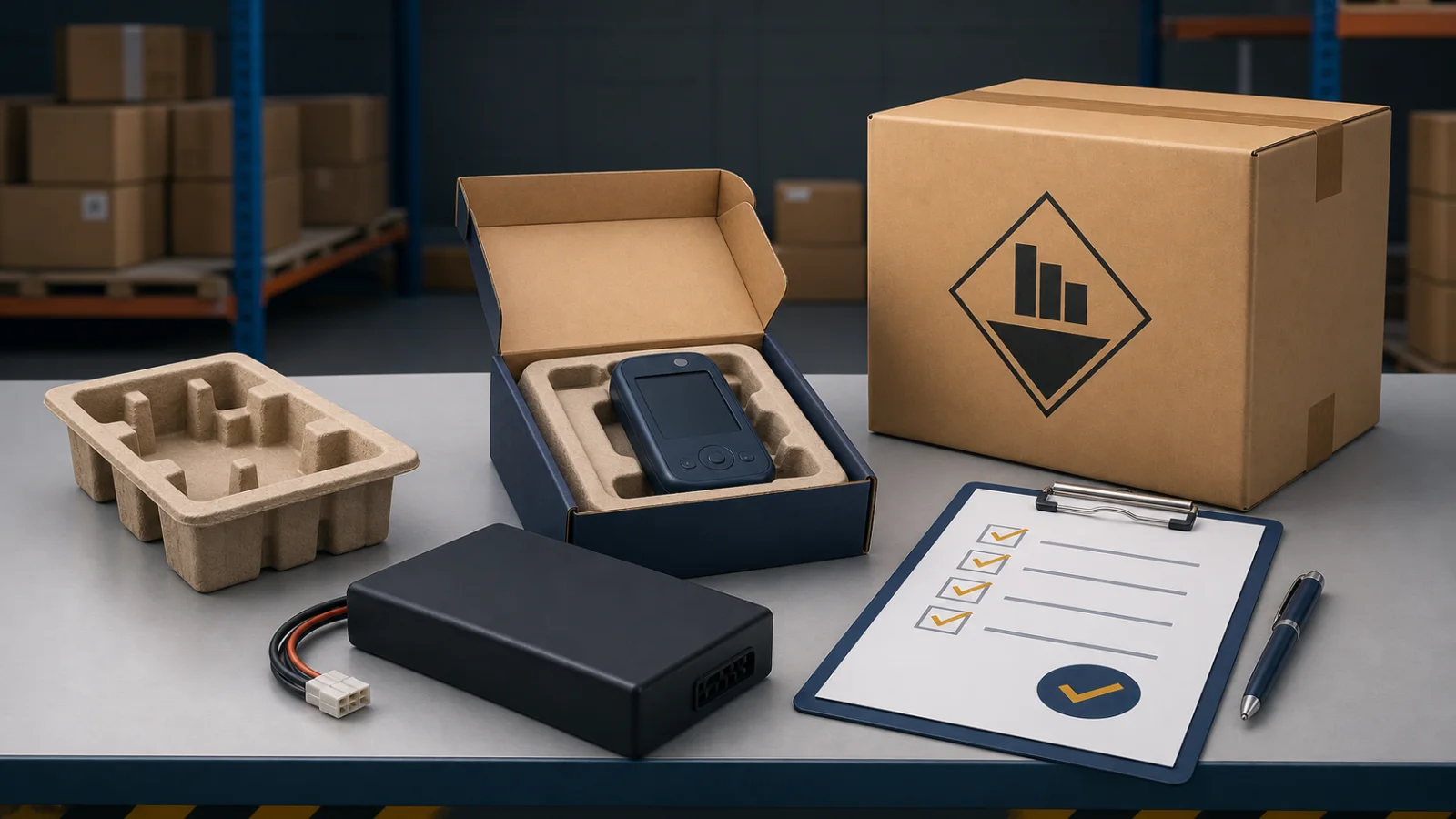
This module connects the specialist-approved transport plan to the physical order. Classification, SoC instructions, test-summary identity, pack-out, marks, booking, and forwarder handoff should all describe the same batteries and cartons before goods leave the supplier.
Battery and shipment identity
- Chemistry, model, cell or battery, Watt-hour rating, quantity, net battery weight, manufacturer, and SKU
- Battery alone, packed with equipment, contained in equipment, or vehicle; air route, airline, forwarder, and destination
Qualified rule decision
- UN number, proper shipping name, packing instruction, section, passenger or cargo-aircraft status, approvals, and operator variations
- Mandatory versus recommended state-of-charge treatment, measurement method, exception basis, and responsible dangerous-goods sign-off
Technical and physical evidence
- UN 38.3 test summary, battery specification, change history, approved packing instruction, and current safety data supplied to the specialist
- Terminal protection, inner packaging, cushioning, activation protection, carton strength, weight, quantity, marks, labels, and packed condition
Booking and release control
- Carrier acceptance, route, dangerous-goods declaration when required, air-waybill entry, emergency contact, pickup window, and handoff party
- Nonconformance list, segregated quantities, correction records, re-check result, buyer approval, and forwarder release instruction
Why lithium battery air-shipment evidence changed in 2026
IATA’s 2026 public battery guidance says that from January 1, 2026, lithium-ion batteries packed with equipment and certain battery-powered vehicles must be offered for air transport at a reduced state of charge unless the relevant state approvals apply. The document explains that lower state of charge reduces the potential for thermal runaway.
The operational attention is current as well as regulatory. In an FAA article published in 2025, the agency said it had verified 38 lithium-battery events involving smoke, fire, or extreme heat through June 30 and recorded 89 events in the prior year. Those figures describe aviation events, not China supplier defect rates, but they explain why carriers and inspectors treat classification, packing, and declarations seriously.
For a buyer, the practical decision is whether the exact cartons should be released to the dangerous-goods forwarder. A generic supplier statement, an old test file, or a battery photo is not a complete release basis when the shipment configuration or route has changed.
- Use the current IATA guidance and the booked carrier’s instructions, not an old shipment template
- Separate what the dangerous-goods specialist decided from what the China-side check physically confirmed
- Reconfirm the release file after any battery, supplier, SKU, pack-out, quantity, route, airline, or forwarder change
Current basis: IATA 2026 lithium and sodium ion battery guidance and the FAA lithium-battery incident article.
Is the battery alone, packed with equipment, or contained in equipment?
Start with the physical configuration because it changes the transport pathway. A lithium-ion battery shipped by itself is not the same as a spare battery packed in the same outer package as a device, and neither is the same as a battery installed in the device. The qualified shipper or dangerous-goods provider should assign the UN number, proper shipping name, packing instruction, section, aircraft limitations, documents, marks, and labels.
The buyer-side evidence file should show the decision inputs: battery chemistry, Watt-hour rating, model, quantity, whether the equipment is in the same outer package, whether the battery is installed, and whether the item can activate in transit. China-side photos can show how the shipment is actually configured, but they do not replace trained classification.
UN 38.3 traceability is another identity gate. IATA states that manufacturers and subsequent distributors of lithium cells and batteries must make a test summary available. Match the report’s battery type, manufacturer, model, and test reference to the purchased version, then send inconsistencies to the qualified party before release.
- Do not treat an SDS as an automatic substitute for a UN 38.3 test summary or transport classification
- Do not reuse a packing instruction because the retail product looks similar
- Record installed batteries and spare batteries separately when one shipment contains both configurations
- Pause when the factory cannot identify the battery model or Watt-hour rating used in each SKU
Classification context: IATA shipper and UN 38.3 test-summary guidance.
When does the 2026 30% state-of-charge rule apply?
For lithium-ion batteries packed with equipment under PI 966 Section I, IATA’s 2026 guidance says cells and batteries must be offered at no more than 30% of rated capacity. Under PI 966 Section II, the same maximum applies when the cell or battery exceeds 2.7 Wh. Higher state of charge follows the Section I approval route described by IATA and requires approvals from the State of Origin and State of the Operator under their written conditions.
For lithium-ion batteries contained in equipment under PI 967, the same guidance recommends no more than 30% state of charge or no more than 25% indicated battery capacity. It explicitly says the reduced state of charge is not mandatory for those items. That difference is why a buyer should not give the factory a universal “set every product to 30%” instruction without qualified review.
A China-side check can compare approved instructions with a documented measurement or device indication when the method is defined. It cannot infer state of charge from packaging, authenticate factory records, or certify the measurement method. Keep the value, method, sample or lot coverage, device used, timestamp, responsible person, and specialist acceptance together.
- Write the exact packing instruction and section beside every SoC instruction
- Define whether the evidence is a measured state of charge, indicated battery capacity, production setting, or supplier declaration
- Escalate values above the approved threshold and do not assume a commercial urgency creates an exception
- Recheck after charging, firmware setup, testing, rework, or any process that could change battery capacity before pickup
Check the mandatory-versus-recommended distinction in pages 13–14 of the IATA 2026 battery guidance.
What should match before the dangerous-goods forwarder collects?
Before pickup, compare the approved packing instruction with physical units and cartons. The evidence may include terminal protection, prevention of accidental activation, inner packaging, cushioning, movement control, carton condition, package quantity and weight, and the marks and labels specified by the qualified shipper. Sampling limits and sealed-carton restrictions should be visible in the report.
Then connect the cartons to the booking. The route, airline, dangerous-goods forwarder, shipper of record, declaration when required, air-waybill entry, operator variations, approval documents, pickup address, and release authority should describe the same shipment. Carrier acceptance can be stricter than a general guide, so the booked operator’s current decision controls whether freight is accepted.
The release result should be simple: release, hold for specialist clarification, correct packing or marks, segregate affected cartons, re-check, or rebook. Do not let the forwarder collect first and plan to solve unresolved battery evidence after the goods leave the supplier.
- Use contextual photos that show the battery, device, inner pack, carton, marks, and carton identifier together
- Keep draft and final labels separate so obsolete artwork is not packed by mistake
- Tie corrections to affected carton numbers and quantities before re-inspection
- Require written carrier or forwarder acceptance when the qualified plan depends on an approval or operator-specific condition