
Quick answer
What should buyers check before metal-containing goods leave China?
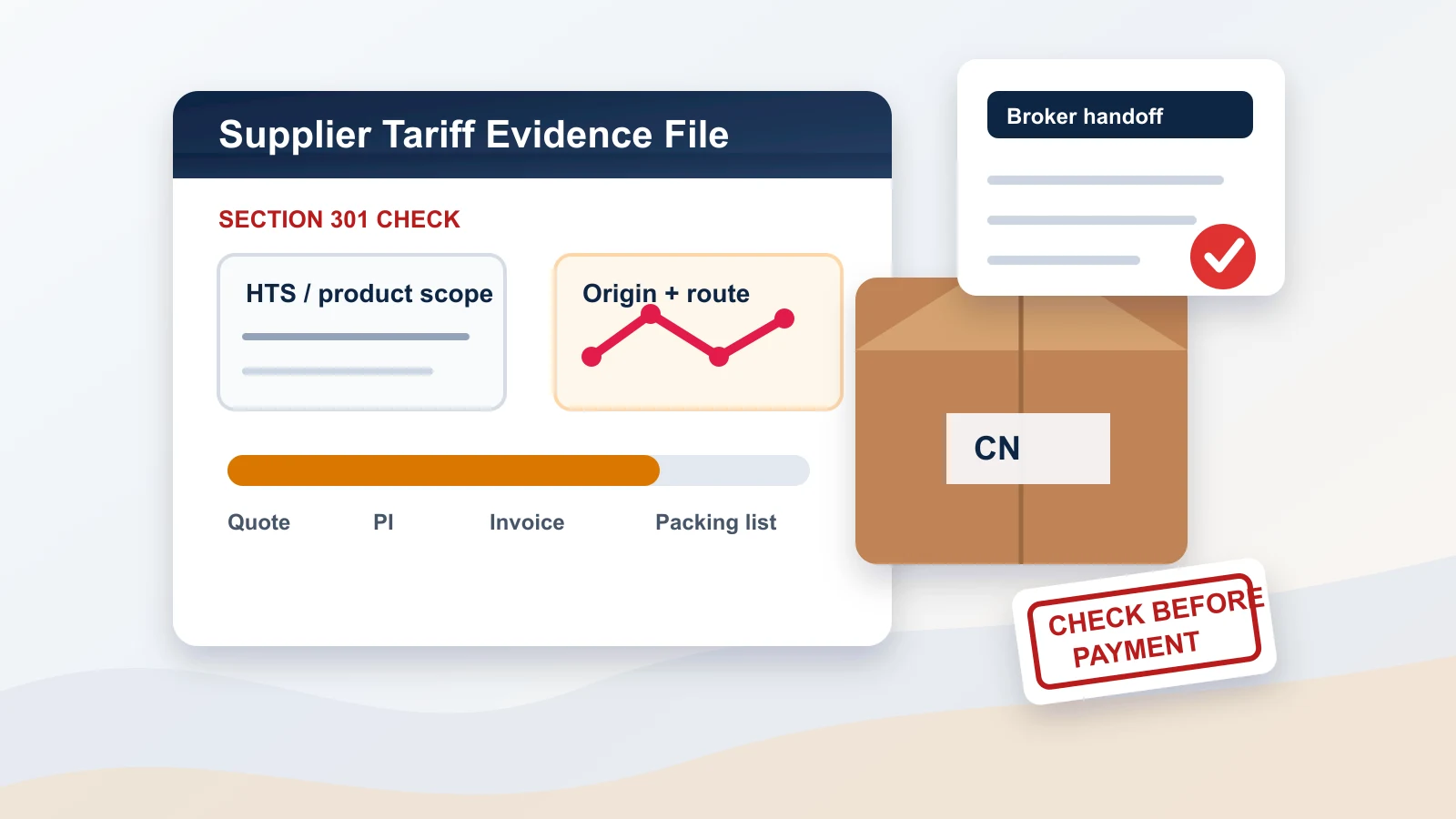
Build a broker-ready file that connects each SKU to product scope, metal content, material evidence, invoice wording, origin facts, valuation support, carton evidence, and release instructions before final payment or pickup.
China-side evidence module
Section 232 metals evidence checklist
The check does not make customs legal decisions. It organizes the product and supplier facts the importer and broker need before entry positions become harder to support.
Product and HTS scope
- SKU, model, function, product description, HTS discussion, derivative-product concern, and broker questions organized by line item
- Photos and specification sheets connected to the exact goods in production, packed cartons, or pickup-ready shipment lots
Metal content evidence
- Steel, aluminum, copper, alloy, component, fastener, frame, housing, rack, plate, machinery, and accessory content identified before shipment
- BOM, material certificate, supplier declaration, drawing, purchase record, or production note retained when metal content affects tariff review
Supplier, origin, and value
- Manufacturer, trading company, payment beneficiary, shipper, exporter, factory location, pickup address, and invoice issuer reconciled
- Quote, proforma invoice, final invoice, assists, tooling, discounts, freight terms, component-source notes, and route changes checked for conflicts
Broker release file
- Importer, broker, HTS notes, Section 232 concern, entry path, bond or account notes, and stop-release instructions gathered before pickup
- Written hold rule used when classification, metal content, U.S. content, origin, valuation, or supplier evidence is missing or inconsistent
Why Section 232 metal tariffs are a current 2026 sourcing issue
Proclamation 11032 is current because it was published in the Federal Register on June 4, 2026 and applies to covered entries from June 8, 2026. It modifies earlier aluminum, steel, and copper tariff regimes and directs agencies to implement additional HTS changes, guidance, and enforcement administration where needed.
The proclamation is not China-specific. That makes the China sourcing workflow more important, not less. Buyers still need to know what the product is, what metal it contains, whether it is a covered article or derivative product, how the invoice describes it, and what the broker needs before the goods leave the supplier.
- The rules can affect products made mostly of metal and products with metal components
- Derivative coverage can change through inclusion processes and Federal Register updates
- Supplier documents often use broad descriptions that are not enough for broker review
- A China-side check can preserve evidence before cartons move to a forwarder or port
Start with the product, not the supplier sales name
A supplier quote may call a product a shelf, bracket, machine part, fixture, rack, appliance, component, accessory, tool, or hardware set. That sales name is not enough. The broker needs the actual function, material, dimensions, parts, composition, and proposed HTS treatment.
Before shipment, connect the buyer-approved product record to what is in cartons. The check should compare product photos, labels, model numbers, component lists, drawings, packing list lines, and invoice wording so the broker is reviewing the real goods, not a generic quotation.
- Identify whether the product is a metal article, derivative article, machinery, equipment, appliance, part, component, or mixed-material good
- Separate the main product from spare parts, replacement parts, fasteners, stands, frames, brackets, and accessories
- Keep SKU-level evidence when only some variants contain steel, aluminum, or copper
- Flag any supplier attempt to simplify the product description after tariff questions begin
Metal content needs evidence before the goods leave China
Section 232 review can turn on metal type, content, component value, and the exact tariff line. A buyer should not rely on a chat message saying the item is iron, stainless steel, aluminum alloy, copper, brass, or mixed metal without supporting production evidence.
Useful China-side evidence may include a bill of materials, material certificate, supplier declaration, drawing, invoice line, component quote, factory photo, product weight note, or inspection photo showing the actual metal part. The goal is not to make a legal duty decision, but to avoid sending the broker unsupported claims.
- Ask for metal type and grade where the supplier can support it
- Tie metal-content evidence to the same SKU, model, batch, and carton count
- Keep separate evidence for frames, housings, racks, plates, tubes, wires, motors, handles, brackets, and fasteners
- Treat missing BOM or material support as a release risk when the broker asks for it
Invoice, origin, and valuation gaps can create tariff risk
Tariff review depends on more than material. The invoice description, price support, production facts, origin story, component source, shipper, route, and importer instructions need to tell one coherent story. That is especially important when a Chinese trading company, factory, exporter, and payment beneficiary are not the same party.
Before final payment, compare the quote, proforma invoice, commercial invoice draft, packing list, product photos, supplier names, carton marks, and broker-approved description. If the supplier changes invoice value, product wording, shipper name, component source, route, or carton count, keep correction evidence and send it to the broker.
- Do not let the supplier lower value or change descriptions to avoid tariff review
- Record manufacturer and exporter names when they differ from the sales company
- Keep tooling, assist, discount, rebate, sample, and freight-term notes with the order file
- Escalate origin, valuation, U.S. content, and metal-origin claims to the broker or customs adviser
Make the broker handoff happen before pickup
A Section 232 question should not wait until the vessel has sailed. If the product is potentially covered, the importer and broker should review the evidence before pickup, while the supplier can still photograph goods, correct documents, explain components, or hold shipment.
The practical handoff is a clean file: product list, photos, specifications, metal-content support, supplier identity, invoice drafts, packing list, origin notes, valuation support, and written decision rules for what should block release.
- Ask the broker what metal-content or component evidence is needed before pickup
- Use broker-approved invoice and packing-list wording across supplier documents
- Hold release when supplier documents contradict the broker file
- Update the broker if the supplier changes materials, parts, cartons, route, or invoice value