
Quick answer
What should buyers check before tabletop fire pits leave China?
Match every model, fuel-system version, factory, production date, lot, and carton to a qualified scope decision, complete exact-sample report, approved construction, fuel and refill instructions, warnings, pack-out, and shipment identity. Hold generic, changed, mixed, damaged, unsupported, or untraceable scope before payment and pickup.
- 1Document destination, intended indoor or outdoor use, product category, exact model/SKU, fuel type, open or closed reservoir design, refill method, accessories, factory, production dates, lot, listing, instructions, and package claims
- 2Require the importer and qualified compliance parties to identify the current applicable rules and standards for the exact product and market before approving test scope or production
- 3Match complete laboratory reports, sample photos, methods, results, limitations, model, reservoir, fuel system, snuffer, materials, factory, dates, and authorized changes to the order
- 4Compare sampled mass production with the approved sample, drawings, bill of materials, and tolerances for geometry, reservoir, seams or joints, feet, stability reference, shields, accessories, workmanship, and product identity
- 5Check permanent product markings, fuel and refill warnings, cooling and extinguishing instructions, intended-use limits, responsible-party details, model, lot, retail pack, quantities, and carton marks
- 6Keep flame-jetting, pool-fire, thermal, spill, stability, combustion, emissions, and regulatory conclusions with qualified laboratories and responsible parties; ordinary onsite observations are not substitute test results
- 7Hold open-reservoir mismatches, supplier substitutions, missing report pages, unapproved fuel claims, damaged reservoirs, mixed warning sets, unsupported indoor-use claims, untraceable lots, or unresolved scope questions
- 8Release only named models, fuel-system versions, production dates, lots, quantities, and cartons after documented correction, qualified disposition, and repeat inspection where needed
China-side evidence module
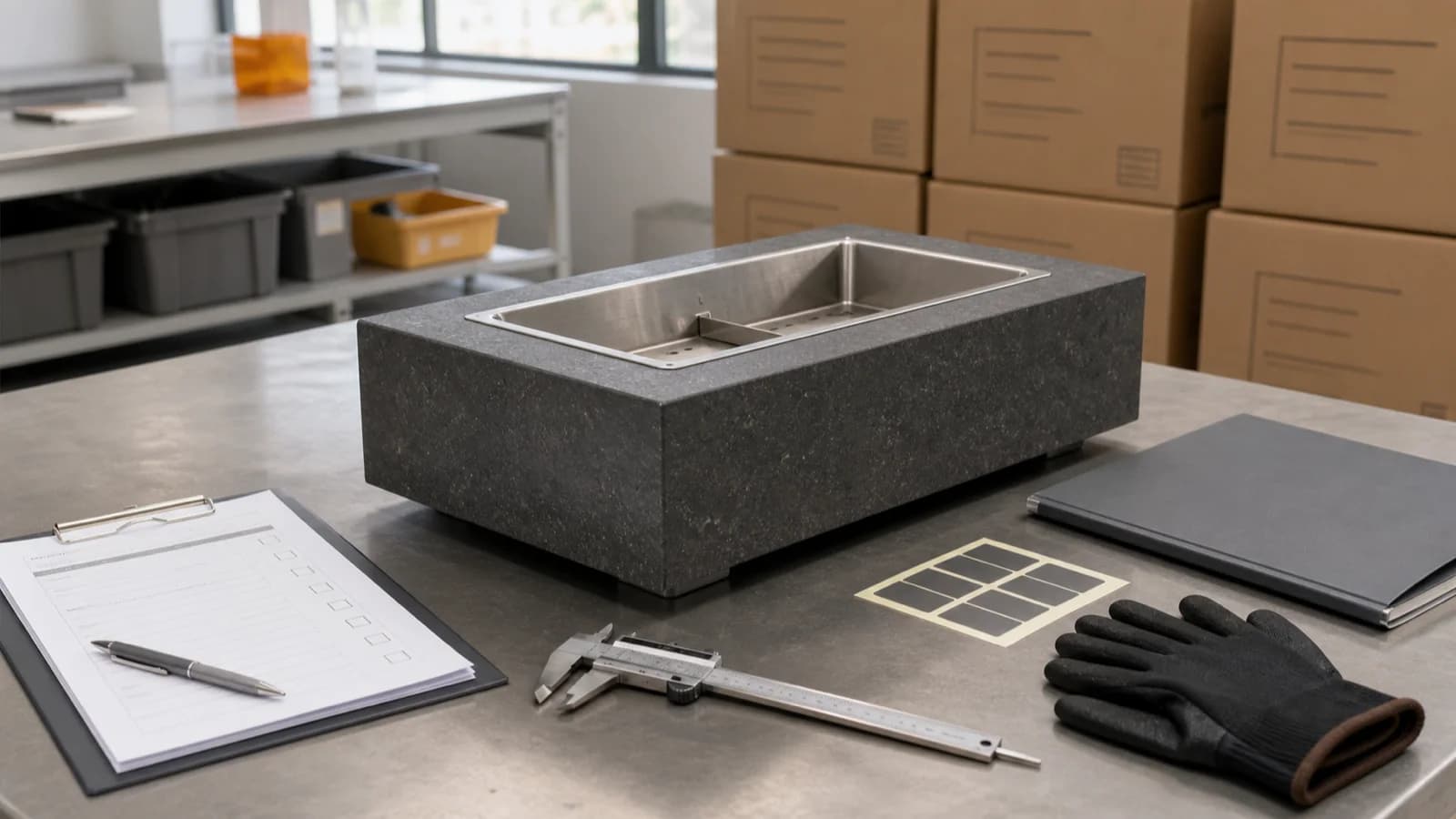
Tabletop fire pit release checklist
Connect qualified product evidence to sampled mass production and pack-out. This module does not turn an onsite comparison into live-fire testing, ASTM certification, legal advice, or a safety guarantee.
Scope, destination, and exact model
- Destination, intended use, product category, fuel, reservoir and refill design, accessories, model, factory, production date, lot, and responsible compliance owner are controlled
- Purchase order, drawings, approved sample, test samples, reports, warnings, instructions, listing, retail pack, carton, and packing list describe the same finished device
Qualified safety evidence
- Current applicable standard, laboratory, report number, methods, sample photos, exact construction, fuel scope, results, limits, dates, and destination review align
- Qualified evidence covers the shipped product rather than another reservoir, burner insert, body material, snuffer, accessory set, factory, prototype, or generic product family
Physical product and pack-out
- Sampled units match approved dimensions, reservoir and burner geometry, joints, feet, shields, snuffer, accessories, visible condition, workmanship, warning placement, and identity
- Fuel claims, instructions, model, lot, barcode, SKU, retail package, quantity, carton marks, carton protection, and packing list are complete and consistent
Hold, correction, and release
- Affected quantity, hold tags, carton map, supplier change, correction instruction, qualified retest or report disposition, revised files, and repeat inspection remain traceable
- Cleared and unresolved models, fuel-system versions, dates, lots, and cartons stay separated; the final release names exact scope and open conditions
Why tabletop fire pit shipment evidence matters now
On July 16, 2026, the U.S. Consumer Product Safety Commission warned consumers to stop using at least 53,500 Houswise tabletop fire pits made in China. CPSC reported more than two dozen incidents involving flame jetting, fuel leaking outside the product, or unexpectedly high flames, with seven injuries including third-degree burns. The agency also stated that the manufacturer had not agreed to a recall or remedy.
The Houswise warning followed an April 2, 2026 CPSC warning for China-made Rozato tabletop fire pits associated with one death and multiple burn injuries. CPSC had already issued a broader December 2024 alert covering alcohol or other liquid-burning fire pits designed around an open pool of fuel, citing two deaths and at least 60 injuries since 2019.
These public records do not prove that every tabletop fire pit, supplier, factory, fuel system, or production lot has the same hazard. They show a recurring decision point: buyers should resolve the exact device scope and qualified evidence before approving production, then confirm that the finished shipment has not drifted from that reviewed version.
- A marketing name such as “tabletop fireplace,” “fire bowl,” or “s’mores maker” does not settle the product or standard scope
- The refill method, open reservoir, fuel container, burner insert, accessories, and use claims can change the risk and evidence questions
- A genuine report is useful only when its sample and scope match the current production model
- Correction leverage is strongest before balance payment and pickup, while redesign, testing, relabeling, segregation, or cancellation remains practical
Current primary records: CPSC Houswise warning, CPSC Rozato warning, and the CPSC category alert.
Define the product, fuel, and destination scope first
Freeze how the device sustains a flame, whether fuel sits in an open reservoir or separate cartridge, what fuel the instructions permit, how the consumer lights, extinguishes, cools, moves, and refills it, and whether the product is marketed for indoor use, outdoor use, cooking, warming, decoration, or multiple uses. Include every accessory and replacement component sold with or for the device.
ASTM currently lists F3363-25 as the active specification for unvented liquid or gel fuel-burning portable devices and explains its scope on the official standard page. CPSC’s December 2024 public alert referenced F3363-19 when describing open-pool devices that violated the then-cited voluntary standard. The buyer should not assume that an old report, supplier statement, or standard edition automatically covers a 2026 order; ask qualified parties to identify the edition and destination requirements that apply to the exact model.
Do not try to cure an unresolved physical design by changing listing words after production. Drawings, fuel claims, warnings, instructions, packaging, online content, approved evidence, and shipped units need to describe one controlled product.
- Freeze reservoir geometry, capacity, burner or absorbent media, fill and refill opening, fuel container interface, snuffer, guards, feet, base, materials, and accessories
- Separate indoor, outdoor, food-warming, cooking, decorative, camping, cartridge, wick, gel, and pourable-liquid claims for qualified scope review
- Document the intended destination and importer before approving the laboratory plan, warnings, or production labels
- Escalate redesigned inserts, new fuels, new accessories, changed use claims, or product bundles before they reach mass production
Review the current ASTM F3363-25 official scope page with qualified product and destination support; the public scope summary is not a substitute for the controlling standard or a compliance determination.
What should the report and test-scope file establish?
Review the complete evidence chain: responsible manufacturer or importer, destination, applicable standard and edition, issuing laboratory, report number, methods, sample photos, drawings, dimensions, reservoir and burner construction, fuel, snuffer, accessories, instructions, warnings, test conditions, results, limitations, dates, factory, and authorized changes.
The ASTM public scope page explains that F3363-25 covers certain portable, ventless devices that sustain a flame over fuel in an open reservoir and also covers separately sold components, while listing exclusions. Scope still depends on the actual product. A buyer-side sourcing team should use that page to frame questions, not to self-certify a device from photographs.
Health Canada’s published 2021–2022 compliance project reviewed 12 portable firepot products against selected ASTM F3363-19 criteria or equivalent and Canadian chemical-container requirements. It resulted in recalls, a public advisory, and removals from sale, while expressly cautioning that the targeted sample was not representative of the overall market. That record reinforces the need to keep report scope, labels, and product identity together without turning one enforcement sample into a market-wide failure claim.
- Obtain complete reports and sample records instead of a report cover, screenshot, supplier summary, or cropped pass page
- Confirm the laboratory, report status, exact sample, model, construction, fuel, accessories, dates, and limitations through independently obtained details
- Ask qualified parties whether material, geometry, factory, component, fuel, warning, instruction, or intended-use changes require additional review or testing
- Escalate missing pages, altered sample photos, inconsistent dates, unexplained model families, obsolete editions, or files that cannot be confirmed
Compare the report chain with the China laboratory report verification guide and inspect the limitations in Health Canada's portable-firepot compliance project.
What can a China-side finished-goods inspection check?
A buyer-side inspection can compare sampled finished fire pits with approved drawings, sample, bill of materials, report identifiers, warnings, instructions, packaging files, and carton records while the order remains accessible. The useful output is a traceable list of sampled models, construction versions, measurements, visible defects, mismatches, and affected quantities.
Check model identity, overall and reservoir dimensions, burner insert, joints, seams, fasteners, feet, level contact, shields, snuffer fit, accessories, surface finish, cracks, sharp edges, contamination, visible leakage or residue, warning placement, instruction set, retail pack, quantity, and carton alignment against the buyer-approved inspection plan.
Do not casually add fuel and light the product during an ordinary factory inspection. Flame-jetting, pool-fire, spill, thermal, stability, combustion, and emissions evaluations require the applicable controlled method, facilities, samples, safety precautions, trained personnel, and qualified interpretation. Onsite evidence can show a mismatch or reason to hold and retest; it cannot reproduce a laboratory program or prove safety.
- Use buyer-approved sampling, measurement points, tolerances, defect classes, tools, photo requirements, and stop rules
- Photograph each sample number, model, date or lot code, measurement, reservoir detail, accessory, warning, package, and carton context
- Quantify mixed reservoirs, inserts, feet, snuffers, accessories, labels, instructions, or fuel claims rather than calling them cosmetic differences
- Keep qualified test samples and any destructive or live-fire work separate from ordinary saleable-stock inspection
Control reservoir, material, fuel, accessory, and factory changes
A change that looks minor to a purchasing team can change the reviewed device. New reservoir depth, opening, absorbent media, burner insert, cement or stone mix, coating, adhesive, shield, foot, snuffer, fuel recommendation, accessory, factory, model name, package claim, or instruction should enter written change control before mass production.
Ask the responsible technical and compliance parties whether the approved evidence still covers the change. Identify the first affected unit and carton, keep cleared and unresolved production physically separated, and map any new samples, reports, warnings, instructions, or inspection criteria to the revised scope.
If correction follows a failed inspection, retain the original finding. A defensible release shows affected quantity, segregation, controlled rework instructions, qualified disposition, revised evidence, repeat inspection samples, cleared carton range, and remaining open conditions.
- Do not accept undocumented substitutions because the finished product looks similar to the approved sample
- Trace components, assembly, warnings, instructions, finished units, production dates, lots, and cartons through one version record
- Hold mixed old and new configurations until affected scope and qualified evidence are reconciled
- Release a named lot and carton range, not a supplier promise that “all goods are now fixed”