
sample consolidation China

Sample Consolidation China: Compare Suppliers Before Choosing a Factory

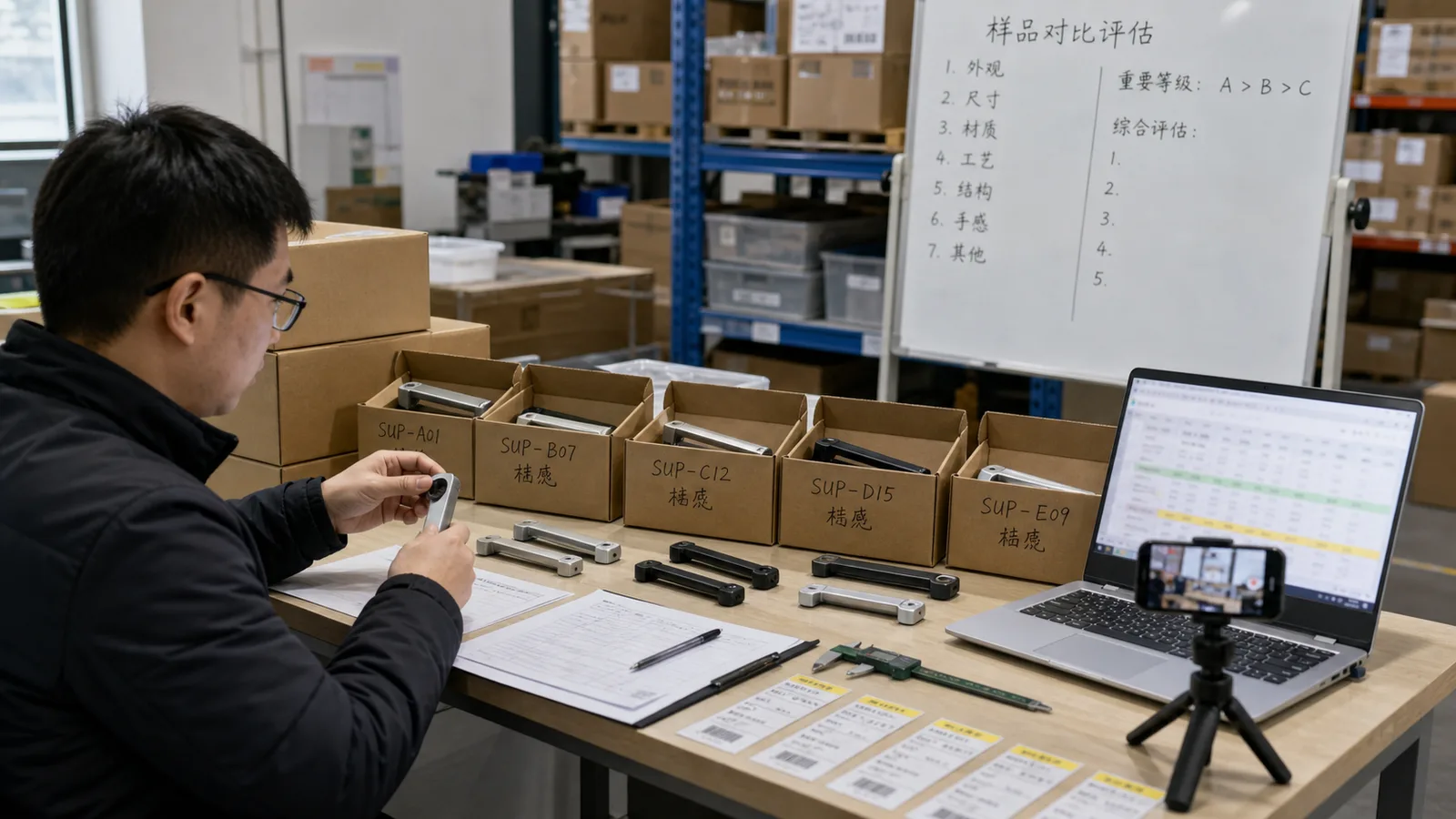
Choosing a factory from scattered supplier photos is risky. Samples arrive at different times, some suppliers show their best angle, and international freight can become expensive before the buyer has even compared what matters. Sample consolidation in China gives buyers one place to receive, label, photograph, compare, and forward samples before supplier selection becomes a deposit decision.

The buyer decision is simple: shortlist the strongest supplier sample, reject weak samples before paying more freight, ask clearer supplier questions, request supplier verification, or pause before choosing a factory.

Written by Agent Huang | Published on May 24, 2026 | Updated on May 25, 2026

China-side sourcing partner helping overseas buyers verify suppliers, inspect goods, and reduce payment or shipment risk before money or goods move.

Quick answer

How does sample consolidation help buyers compare suppliers before selection?

It puts supplier samples in one China-side workflow: receive, label, photograph, compare visible checkpoints, decide which samples deserve forwarding, and move shortlisted suppliers to verification when needed.

1Inbound sample tracking by supplier, product version, arrival date, and parcel condition
2Unboxing evidence so the buyer can see what each supplier actually sent
3Supplier codes, sample labels, packaging marks, and photos that prevent sample mix-ups
4Side-by-side comparison of visible finish, size, material, color, workmanship, and accessories when scoped
5Basic measurement or weight checks when the buyer provides comparison points
6Packaging, insert, label, carton, and presentation differences before supplier selection
7Notes on which samples should be forwarded, held, rejected, or used for deeper verification
8Outbound consolidation plan so the buyer does not pay separate international freight for every supplier

Why sample consolidation should happen before choosing a factory

A supplier sample is not just a small product. It is evidence of communication, handling, packaging discipline, and whether the supplier understands the buyer requirement. When samples are reviewed separately, it is easy to forget small differences that matter later in production.

Sample consolidation China support works best before the buyer commits to one factory. Agent Huang can receive samples from several suppliers, organize them by supplier code, photograph the same angles, and help the buyer decide which samples deserve forwarding, verification, negotiation, or rejection.

  • Approve a stronger sample only after comparing it against other supplier samples
  • Hold supplier selection when labels, packaging, or sample origin are unclear
  • Reject weak samples before paying repeated international freight
  • Move the shortlisted supplier to verification before deposit if company or payment risk remains

What to check when comparing supplier samples in China

A useful sample comparison does not need to pretend it is a full lab test. It should focus on visible evidence that helps the buyer choose a next action: approve, hold, reject, verify, or request another sample.

The check starts with chain of identity. Each parcel should connect to a supplier, a tracking number, a product version, and a sample label. Then the comparison can move to visible product condition, finish, measurement points, packaging, accessories, and whether the sample matches the requirement the buyer gave.

  • Receipt evidence: parcel label, supplier code, arrival date, and whether the outer package arrived damaged
  • Identity control: sample tag, supplier name or code, product version, quote reference, and photo file naming
  • Visible product comparison: finish, color, surface defects, fit, structure, accessories, and workmanship consistency
  • Simple measured points: size, weight, material feel, part count, or other buyer-defined checkpoints
  • Packaging comparison: inner bag, retail box, insert, label position, carton marks, and presentation quality
  • Decision notes: forward, hold, reject, request replacement sample, verify supplier, or ask for corrected evidence

Agent Huang field notes from sample consolidation work

The most common problem is not one bad sample. It is messy sample identity. A buyer may receive five parcels, but the supplier names, versions, colors, and tracking numbers are not clearly connected. Later, the buyer remembers which sample looked best but cannot confidently tie it back to the right supplier and quote.

Another practical issue is supplier presentation. Two samples may look similar, but one supplier sends clean labeling, correct accessories, and clear packaging while another sends loose parts with no version control. That does not prove future production quality, but it gives the buyer a stronger question to ask before selecting a factory.

  • Keep supplier codes simple and consistent from inbound receipt through outbound shipment
  • Photograph comparable angles so sample differences are visible, not hidden by supplier-selected photos
  • Separate sample comparison from supplier verification; product evidence and company risk are different checks
  • Use the sample result to decide the next step instead of treating consolidation as automatic approval

Sample decision table

What was checked and what the buyer can decide.

Sample consolidation is useful when the output is a decision, not just a parcel forwarding task. Each check should lead to a clear next action.

Risk node
What was checked
Buyer decision
Sample identity
Supplier code, tracking number, product version, parcel label, sample tag, and photo file naming
Proceed with comparison, hold unclear samples, or ask the supplier to confirm identity
Visible product difference
Finish, color, surface condition, workmanship, fit, accessories, part count, and buyer-defined checkpoints
Shortlist, reject, request revised sample, or ask for production clarification
Packaging and labeling
Inner packaging, retail box, insert, sample label, carton marks, and whether supplier origin stayed clear
Forward sample, hold for relabeling, request packaging correction, or compare another supplier
Supplier-selection confidence
Side-by-side evidence, quote alignment, supplier communication, and whether the sample matches the requirement
Choose a supplier, narrow the shortlist, verify the supplier, or delay factory selection
Outbound freight waste
Which samples are worth forwarding, which should be held, and whether samples can ship together after review
Consolidate outbound shipment, reject weak samples in China, or ship only the shortlisted set

Evidence basis for this advice.

This sample-comparison guidance is based on labeled samples, arrival photos, product specs, packaging evidence, and the buyer decision before choosing one supplier.

  • Supplier sample labels, tracking numbers, arrival photos, supplier codes, product specs, and buyer comparison priorities provided before consolidation.
  • China-side warehouse evidence showing received samples, visible condition, packaging, labels, finish differences, and side-by-side comparison context.
  • Sample handling workflow judgment from receiving, labeling, photographing, grouping, holding, rejecting, or forwarding samples before supplier selection.
  • Buyer-stage decision context: shortlist a supplier, request clearer evidence, reject weak samples, verify the supplier, or pause before deposit.

What to send before samples arrive.

Clear supplier and tracking details keep the sample comparison clean. The more precise the buyer list is, the less risk there is of mixing samples.

  • Supplier names, supplier codes, contact details, and product links or quote references
  • Tracking numbers, courier names, expected arrival dates, and the city each supplier ships from
  • Photos or descriptions of the exact product version each supplier should send
  • Comparison points that matter to you: size, color, finish, material, accessories, packaging, label, or function
  • Which samples must be forwarded overseas and which can be held until comparison is complete
  • Destination country, preferred shipping method, deadline, and any special handling requirements
  • Your decision goal: choose one factory, reject weak suppliers, request revised samples, or verify shortlisted suppliers

Red flags before choosing one factory.

These signals do not automatically disqualify a supplier, but they mean the buyer should slow down before deposit or supplier selection.

  • Supplier sends a sample with no tag, no version note, and no clear link to the quote
  • Tracking number, supplier name, parcel label, and sample contents do not match the buyer list
  • Sample packaging hides origin or mixes accessories from different suppliers
  • The supplier refuses to confirm whether the sample came from the same source planned for bulk production
  • The sample looks acceptable but the supplier cannot explain materials, dimensions, or changes from the buyer request
  • Several suppliers send similar samples but one quote, payment entity, or company identity looks inconsistent
  • The buyer is about to choose the cheapest supplier before comparing physical samples side by side

Scope limits

What sample consolidation cannot guarantee.

Sample consolidation improves comparison evidence before supplier selection. It does not turn a sample into a guarantee for mass production.

  • Sample consolidation reduces comparison and freight waste, but it does not guarantee bulk production quality
  • It does not replace supplier verification, factory audit, legal due diligence, compliance testing, or product certification
  • It does not prove that future mass production will match the approved sample unless later QC is scoped
  • It is not a lab test, destructive test, safety test, or engineering validation unless separately arranged
  • Basic comparison depends on the buyer providing clear comparison points and supplier identity information
  • Storage time, special handling, fragile goods, batteries, liquids, branded goods, or regulated products may require separate scope

Frequently asked questions

What is sample consolidation in China?

Sample consolidation in China means suppliers send samples to one China-side address for receipt, labeling, photos, basic comparison when scoped, and consolidated outbound shipment after the buyer decides what should be forwarded.

Can Huang Sourcing compare samples before forwarding them?

Yes. Agent Huang can compare visible points such as finish, size, packaging, labels, accessories, and other buyer-defined checkpoints. Lab testing, compliance testing, and technical validation are separate scopes.

Does sample consolidation replace supplier verification?

No. Sample consolidation compares product samples and shipment evidence. Supplier verification checks company identity, factory role, documents, payment details, and deposit risk before the buyer chooses or pays a supplier.

When should buyers use sample consolidation China support?

Use it before choosing a factory when several suppliers are sending samples, freight costs are increasing, supplier photos are not enough, or you need side-by-side evidence before shortlisting one supplier.

Can weak samples be rejected before international shipping?

Yes. If the buyer agrees, weak or irrelevant samples can be held or rejected in China so only useful samples are forwarded overseas, reducing unnecessary freight cost.

Before supplier selection

Compare samples before the factory choice becomes deposit risk.

Send supplier names, tracking numbers, product requirements, comparison points, and the decision you need after the samples arrive.

Start Sample Consolidation