
Quick answer
How can buyers check factory vs trading company signals in China?
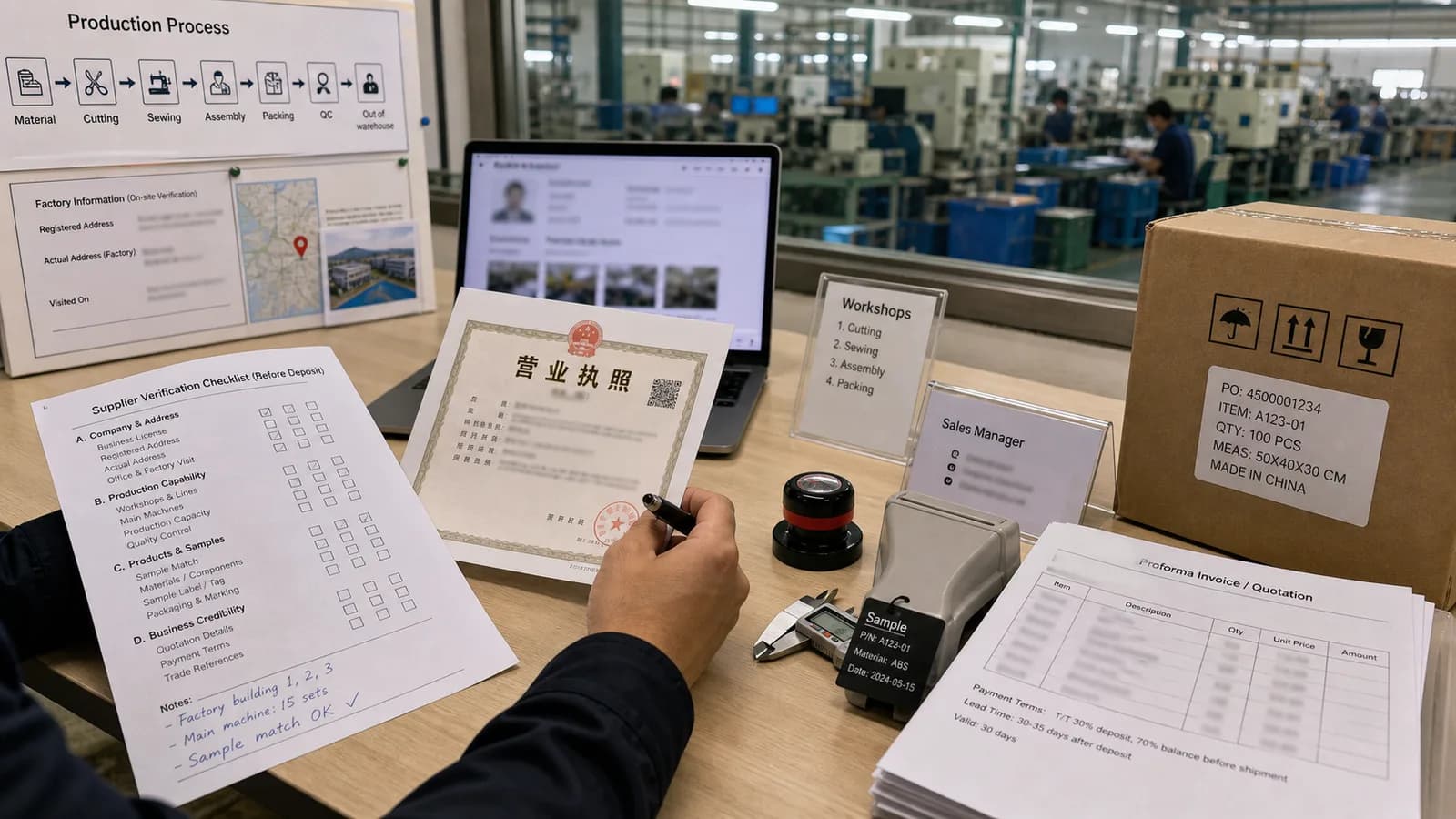
Compare license, address, production evidence, sample origin, quote issuer, payment beneficiary, and correction responsibility before paying a deposit.
Why factory vs trading company signals should be checked before deposit
Many buyer problems start when the supplier role is assumed instead of checked. The website says manufacturer, the sales person says factory, the quote looks normal, and the buyer pays a deposit before knowing whether the company actually owns production or is coordinating through another factory.
The goal is not to reject every trading company. Some traders coordinate small orders, multi-SKU sourcing, export documents, and communication better than a factory. The buyer risk is paying as if the supplier controls production when the supplier may only control communication.
- Proceed when the supplier role, payment entity, and production evidence are aligned
- Ask for supplier verification when the quote, license, address, or factory evidence conflicts
- Request a factory visit when production capability is the buyer decision
- Pause before deposit when the supplier cannot explain who produces, who invoices, and who fixes issues
What practical signals buyers can check
A practical factory vs trading company China check does not rely on one question: "Are you a factory?" It compares visible signals across documents, addresses, payment details, production evidence, and sample origin.
Agent Huang looks for alignment. The business license should connect to the company name. The factory address should connect to the production site. The quote and bank details should connect to the company taking responsibility. The sample should connect to the same production source the buyer is about to pay.
- Company identity: Chinese legal name, business license, unified credit code, company chop, and export or trading scope
- Address signals: registered address, office address, claimed factory address, actual production address, and pickup or inspection address
- Production evidence: workshop photos, machine type, process steps, line capacity, QC area, packing area, and whether the site matches the product category
- Factory access: whether an onsite visit, video walk-through, or third-party check can happen at the claimed production site
- Sample origin: sample tag, sample packaging, carton mark, supplier label, product version, and whether the sample came from the same source as bulk production
- Commercial consistency: quote issuer, proforma invoice, payment beneficiary, bank account, deposit request, warranty promise, and who signs correction responsibility
Agent Huang field notes from supplier role checks
The biggest warning sign is usually not that a company is a trader. It is when the supplier keeps changing the story: one company name on the profile, another name on the license, a different factory address for inspection, and a separate payment beneficiary for the deposit.
A real factory can still outsource work. A trading company can still be a useful sourcing partner. The buyer needs enough evidence to decide whether the supplier role fits the order size, quality risk, payment stage, and correction expectations.
- Do not judge by showroom photos alone; connect the photo to an address and product process
- Check the payment entity before deposit, not after the supplier sends a proforma invoice
- Treat similar company names as a risk until the Chinese legal name and business license are clear
- Ask who can authorize rework, replacement, or refund if production does not match the approved sample