
Host-model fit · test evidence · lot release
Crib Mattress Checks Before Shipping from China
Before paying the balance or authorizing pickup for a China-made crib or aftermarket play-yard mattress, identify the exact mattress variant and every crib or play-yard model it claims to fit. Match that claim to qualified compatibility testing, the approved construction, labels, production lots, and cartons. Hold any variant whose host-model evidence or shipment identity is missing.
Written by Huang Sourcing Editorial TeamPublished on September 30, 2026
Based on cited public records and buyer-side sourcing analysis; limits and specialist responsibilities are stated below.
Quick answer
What must match before a crib mattress lot moves?
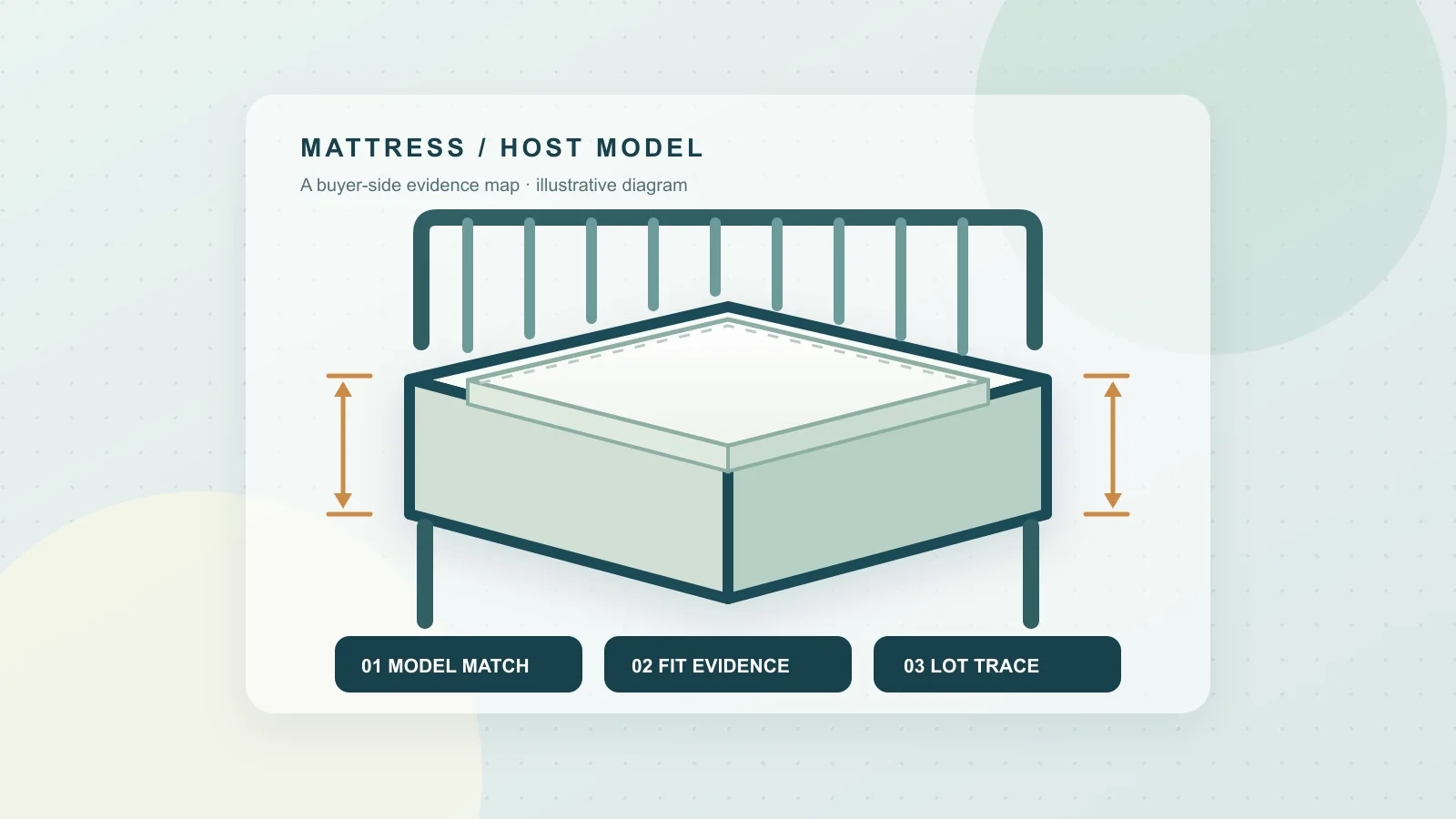
Use three gates: classify the exact mattress and intended host products; have the importer confirm applicable U.S. rules, test reports, and certificate scope; then compare sampled production, compatibility labels, packages, lots, and cartons with the approved version. A visual factory check can record mismatches. It cannot prove infant-sleep safety or replace prescribed testing.
The first decision is the product category. CPSC crib-mattress guidance distinguishes full-size crib mattresses, original-equipment non-full-size mattresses, and aftermarket mattresses for non-full-size cribs or play yards. For an aftermarket product, a size description alone does not establish compatibility: the intended host models must be specifically identified and tested. Compare the listing, label, retail pack, instructions, tested host-model list, and actual production version before releasing goods.
Current public evidence
Separate 2026 records make fit and fire evidence distinct.
The August 6 CPSC Voomf recall covers about 2,401 China-made play-yard and crib mattresses. CPSC says the play-yard mattresses may not adequately fit certain play yards, creating an entrapment hazard; the full-sized crib mattresses separately violate the mandatory mattress-set flammability standard. CPSC reported one inadequate-fit report and no injuries. These are different findings within one recall, not evidence that every variant failed in the same way.
In a separate July 2 Criblike warning, CPSC identified aftermarket models that may not fit certain play yards or non-full-size cribs. The warning also describes a narrow model/date and host-crib exception. That precise exception shows why a generic “fits most” claim cannot substitute for a tested host-model list. Babylist includes the Voomf case in its current 2026 roundup; this is independent coverage, not proof of search volume.
Buyer-side release module
Four checks before balance payment or pickup
Agree the sample plan and stop rules while the goods remain accessible. Keep qualified testing and certification separate from a shipment inspection.
- 1
Freeze the product and host models
List each mattress SKU and version, intended use, claimed compatible crib or play-yard model, original mattress reference, factory, production lot, and carton range.
- 2
Map qualified evidence
Have the importer and qualified lab reconcile the applicable rule set, host-model compatibility tests, sample identity, construction, flammability evidence where applicable, and CPC.
- 3
Compare production and claims
Sample named lots. Record dimensions, thickness, flatness, support structure, cover and seams, approved material changes, label and instruction text, packaging, and carton identity.
- 4
Hold or release named scope
Segregate unmatched host-model claims, changed materials, missing reports, failed fit checks, incorrect labels, or mixed cartons. Release only after documented specialist disposition and repeat checks.
At the factory
Connect the actual mattress to its claimed host.
For every model and lot, compare the approved sample, construction, dimensions, thickness, flatness, floor-support structure, cover, seams, and markings with sampled finished goods. For aftermarket products, check the original-equipment mattress reference and the named crib or play-yard models against the qualified compatibility file. A production substitution or a different host model changes the evidence question. CPSC guidance says testing must address each intended compatible host model.
Photograph model and lot identifiers on the mattress, label, retail pack, and carton; reconcile them with the purchase order and packing list. Check that compatibility claims, warnings, and instructions name the same scope. The importer must determine whether part 1241, other crib or play-yard provisions, flammability standards, and children’s product rules apply to the exact sale configuration.
Request one release pack
- Destination, importer, product category, exact mattress models, intended host models, factory, lots, quantities, and carton map.
- Approved sample, bill of materials, dimensions, thickness, support structure, construction drawings, and controlled change log.
- Complete host-model compatibility tests, other applicable test reports, tested-sample identity, laboratory scope, and Children’s Product Certificate.
- Retail listing, label, warnings, instructions, tracking marks, package artwork, and outer-carton identity.
- Failed-unit IDs, segregation record, qualified disposition, any needed retest, correction, and repeat inspection.
Evidence to decision matrix
Turn a mismatch into a named lot decision.
A matching tape-measure reading alone does not clear a different host model, construction, warning, or production lot.
Public case example
Voomf: one recall, two different evidence failures
What happened: The CPSC recall notice of August 6, 2026 identifies Voomf play-yard and crib mattresses sold online and made in China. It says the play-yard products may not adequately fit certain play yards, while the full-sized crib mattresses violate a mattress-set flammability standard. The notice reports one inadequate-fit report and no injuries.
What evidence was public: CPSC identifies the tri-fold play-yard mattress model BYL001, separate crib-mattress description, labels, sale period, importer, hazards, and refund remedy. It does not publish a complete laboratory file or establish the root cause for another manufacturer’s goods.
Buyer lesson: Maintain separate test and release tracks for host-model compatibility and applicable flammability requirements. Tie each report and Children’s Product Certificate to the exact variant, tested sample, approved build, and named production lots. Trace the same identity into the label and cartons.
Limits of comparison: The recall does not prove other crib mattresses or suppliers are unsafe. It gives no permission to infer an unreported material or factory cause. Huang Sourcing did not participate in this recall. A buyer-side inspection cannot certify regulatory compliance or guarantee every unit.
Evidence basis for this advice.
This guide uses two separate 2026 CPSC records, current CPSC business guidance, independent Babylist coverage, and buyer-side sourcing analysis. The official records control case facts; the release workflow is our analysis.
- Voomf is a recall with one reported fit issue and no reported injuries; Criblike is a separate CPSC warning with its own affected model/date scope.
- Current CPSC guidance requires aftermarket compatibility to be established for each intended crib or play-yard model, with matching product, package, and instruction claims.
- Testing, certificate scope, and legal release belong to the responsible importer and qualified specialists; Huang Sourcing did not work on either public case.
Scope limits and stop rules
Product classification, fit testing, firmness, flammability, labeling, and certificate obligations depend on the exact mattress and sale configuration. CPSC’s crib-mattress FAQ explains that generic size-based compatibility cannot meet aftermarket requirements. Third-party testing guidance and the CPC guidance define specialist and importer responsibilities.
Hold affected stock if a claimed host model has no supporting test, a production build differs from the tested sample, the fit check fails, a required warning or model label is absent, reports and CPC do not identify the product, or cartons mix untraceable versions. Obtain a documented qualified disposition, any necessary new testing, corrected claims or goods, and a repeat shipment check before limited release.
Make the hold or release scope explicit.
Share the exact mattress and host models, approved sample, full reports, CPC, labels, lots, carton map, and pickup date. Huang Sourcing can scope a China-side comparison and document gaps for qualified review.
Sources
Public sources checked September 30, 2026 Beijing time. CPSC controls case and regulatory facts; independent coverage is an attention signal. None implies Huang Sourcing involvement.