
Quick answer
What should buyers check before mattresses leave China?
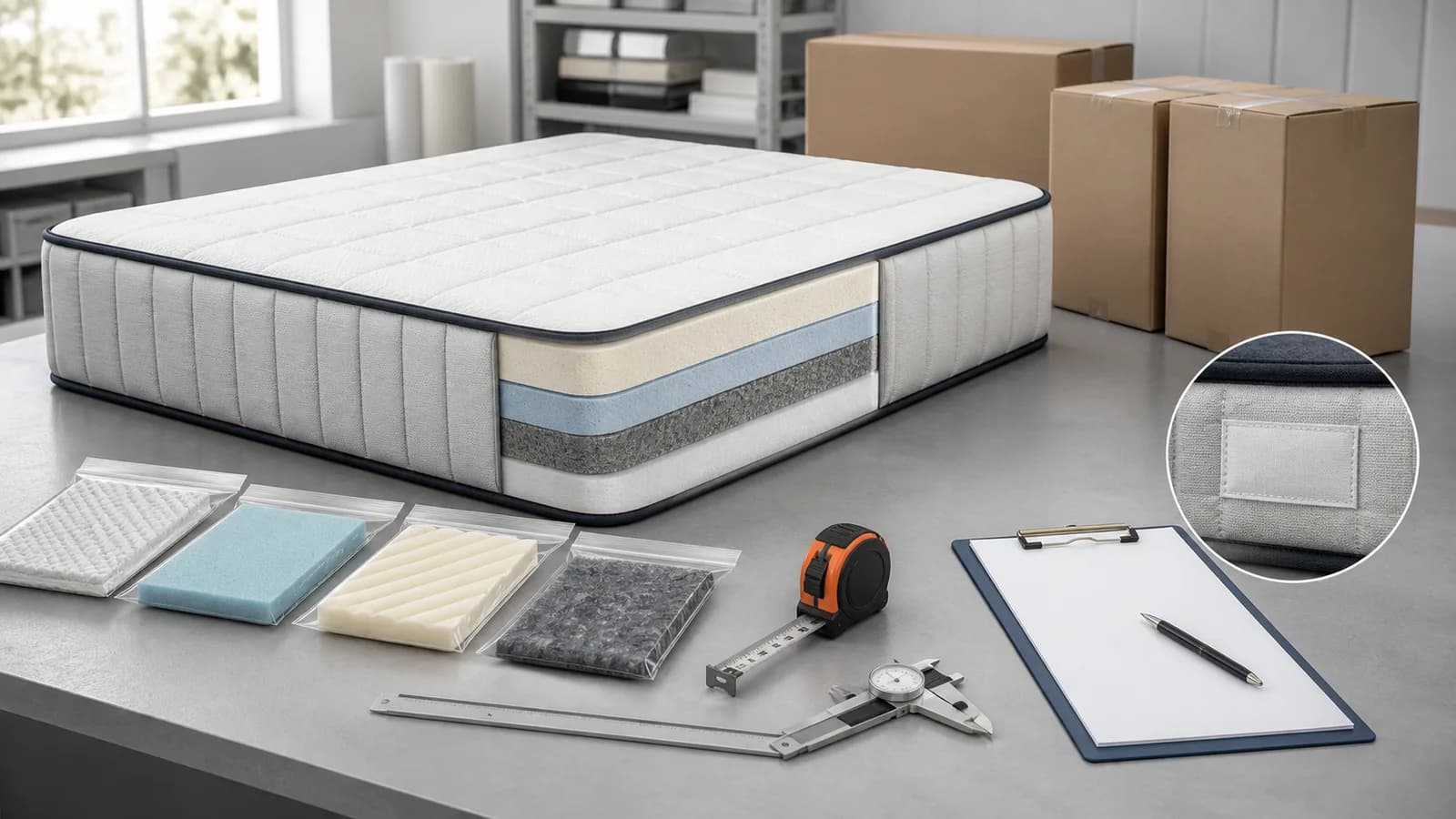
Match the exact finished mattress and lot to qualified prototype evidence and a controlled production file. Inspect sampled goods for model identity, dimensions, approved visible construction, workmanship, permanent labels, compressed packages, quantities, and cartons. Hold any mismatch; do not treat a loose material document, report cover, or improvised burn demonstration as proof of prescribed mattress flammability performance.
- 1Freeze the destination, importer, exact model, size, thickness, sale with or without a foundation, manufacturer, factory, production date, lot, compressed-pack version, label, and carton identity
- 2Have the importer and qualified advisers confirm product scope and the current requirements that apply to the exact mattress, mattress pad, or mattress set
- 3Map complete part 1632 smoldering-ignition records and part 1633 open-flame records to the relevant prototype, tested build, sample identity, laboratory, dates, results, and limitations
- 4Compare the approved ticking, quilting, tape edge, barrier, upholstery, foam or spring core, adhesive, thread, foundation, assembly method, and permitted substitutions with current production
- 5Check sampled finished goods for model, dimensions, thickness, mass-production construction, seams, tape edge, quilting, workmanship, odors or contamination specified by the buyer, and visible damage
- 6Check the permanent part 1633 label, manufacture month and year, model and prototype IDs, manufacturer and importer details, sale configuration statement, GCC data, package, carton marks, quantities, and packing list
- 7Hold mixed lots, unexplained component substitutions, missing or mismatched prototype records, incomplete labels, failed samples, uncontrolled rework, or cartons that cannot be tied to a named lot
- 8Release only named models, production lots, quantities, packages, and cartons after documented correction, qualified disposition, and repeat inspection or testing where required
China-side evidence module
Mattress release checklist
Connect qualified prototype and test evidence to sampled mass production and pack-out. This checklist does not turn an onsite comparison into prescribed flammability testing, certification, legal advice, or a fire- safety guarantee.
Identity and prototype scope
- Destination, importer, model, size, thickness, foundation configuration, manufacturer, factory, prototype ID, production date, lot, quantity, and approved changes are controlled
- PO, approved sample, specification, bill of materials, reports, prototype records, GCC data, label, package, listing, packing list, and cartons describe one saleable version
Qualified flammability evidence
- Complete part 1632 and part 1633 records identify the tested prototype, construction, sample, laboratory, test dates, methods, results, photographs, and applicable limitations
- Qualified-prototype, confirmed-prototype, pooling, manufacturing, quality-assurance, substitution, failure-disposition, and retention records are available where applicable
Production and pack-out
- Sampled units match approved ticking, quilt, tape edge, barrier, upholstery, core, adhesive, thread, foundation, assembly, dimensions, workmanship, and visible-condition limits
- Permanent label identity, manufacture date, model and prototype IDs, certification statement, sale configuration, compressed pack, carton quantity, marks, and packing list align
Hold, correction, and release
- Affected quantity, hold tags, lot and carton map, supplier change, controlled rework, qualified retest decision, revised records, and repeat inspection remain traceable
- Cleared and unresolved models, dates, lots, packages, and cartons stay separated; final release names the exact scope and every open condition
Why mattress flammability evidence matters now
On September 24, 2026, CPSC announced a recall of about 48,405 China-made Kesyup mattresses. The notice says the mattresses violate the mandatory flammability standard, identifies four sizes sold compressed in boxes, and shows a sewn-in prototype ID label. No incidents or injuries were reported. The notice does not publish a root cause or the full testing file.
CPSC announced a separate recall the same day of about 792 China-made WinxMatrs mattresses, also citing a mandatory flammability-standard violation. A third same-day notice covered about 263 Emerspring mattresses made in Indonesia. The different origin and different remedy in that case matter: these are separate product records, not one China factory failure.
Earlier 2026 CPSC records for TRWZINY and EVLWZL/Gunugu remain useful comparisons. Across these notices, the buyer-side lesson is to reconcile the exact tested prototype and controlled build with the finished model, label, manufacturing lot, pack, and carton map before release. A marketplace listing, generic “fireproof” claim, supplier declaration, or report cover is not a substitute.
- A supplier statement that a mattress is “CPSC,” “16 CFR,” or “fire retardant” compliant needs complete source evidence and precise prototype scope
- Changes to ticking, quilt build, barrier, foam, batting, core, tape edge, adhesive, thread, assembly, foundation, supplier, or factory can change the evidence question
- A visual check, lighter demonstration, material certificate, or burn of a loose swatch does not reproduce the prescribed mattress test program
- Correction leverage is strongest before final payment and pickup, while affected lots can still be held, reviewed, tested, reworked, relabeled, repacked, or rejected
Evidence checked: CPSC Kesyup mattress recall, CPSC WinxMatrs mattress recall, CPSC Emerspring mattress recall (Indonesia), CPSC TRWZINY mattress warning, CPSC EVLWZL and Gunugu mattress recall, China MOFCOM WTO/TBT recall coverage.
Freeze the exact prototype, sale configuration, factory, and lot
Start with classification and the sale configuration. CPSC guidance explains that mattresses generally fall under both 16 CFR part 1632 and part 1633, while definitions and narrow exclusions depend on the product. A mattress intended for sale with a foundation and one intended for sale without a foundation can require distinct part 1633 prototype treatment.
Build one controlled model record connecting the marketplace SKU to the manufacturer, factory, model, size, thickness, intended foundation, prototype IDs, specifications, bill of materials, construction drawings, sample photos, label, compressed pack, production date, lot, and cartons. Size alone may be treated differently from a construction change, but that decision belongs to the responsible compliance parties using the rule and records.
Keep every change visible. If the factory substitutes a textile, fire barrier, foam, batting, core, adhesive, tape edge, thread, quilting pattern, foundation, assembly method, component supplier, subcontractor, or production site after testing, hold the affected production until qualified parties document whether the original prototype still applies or new qualification is needed.
- Control approved specifications, layer build, component trade names or controlled identities, densities and dimensions, drawings, samples, labels, package artwork, and change log
- Identify the first affected date, lot, quantity, package, and carton range for every approved or suspected change
- Photograph repeatable identity points on the mattress, permanent label, compressed package, inner protection, and cartons
- Reject unexplained model aliases, prototype-family claims without rationale, or report photographs and construction details that do not match production
Evidence checked: CPSC mattress scope and prototype guidance, Current 16 CFR part 1633 text.
What should qualified flammability evidence connect?
CPSC’s current guidance separates two federal standards. Part 1632 addresses smoldering ignition and uses lighted cigarettes on defined mattress surface locations. Part 1633 addresses open-flame performance during a 30-minute test and includes peak and early total heat-release criteria. The applicable evidence must map to the actual product scope rather than to a similar mattress or a loose material alone.
Review the complete records, not only a pass page. Capture the laboratory and responsible parties, prototype identification, sample construction, photographs, receipt and test dates, conditions, procedures, individual results, deviations, failures and disposition, substitutions, pooling or confirmation where used, manufacturing lots, quality-assurance controls, and record-retention owner.
The importer and qualified product-safety specialists should select the controlling requirements, prototype route, laboratory, sample plan, certificate basis, and acceptance decision. A General Certificate of Conformity should identify the applicable rules and supporting records for the imported product; a certificate does not replace those records or prove that production stayed unchanged.
- Confirm reports with the claimed laboratory or official verification route where one exists
- Match tested ticking, seams, quilt, tape edge, barrier, upholstery, foam or spring core, adhesive, thread, foundation, assembly, labels, and identifiers to the approved build and current lot
- Escalate cropped files, edited results, inconsistent dates, missing construction details, unclear sample identity, unsupported grouping, or reports issued to another product
- Keep qualified prescribed testing separate from routine buyer-side inspection, supplier demonstrations, and material-only screening
Evidence checked: CPSC mattress flammability FAQ, Current 16 CFR part 1632 text, Current 16 CFR part 1633 text, Huang Sourcing laboratory report verification guide.
Control production materials and substitutions by lot
The buyer needs a production evidence chain, not a one-time sample story. Compare approved component identities and construction with purchase records, incoming records, issue-to-line records, work instructions, in-process checks, finished-lot records, and retained samples where those controls are part of the agreed quality plan.
For part 1632, the regulation and CPSC guidance address prototype construction and controlled routes for certain ticking or tape-edge substitutions. Part 1633 defines a prototype by materials, components, design, and assembly and includes records for qualified and confirmed prototypes and quality assurance. Do not infer that a cheaper “equivalent” material is allowed merely because color, feel, or thickness looks similar.
When a substitution appears, identify the exact old and new material, supplier, specification, first production date, affected lot and quantity, prototype impact, open records, and physical carton scope. Segregate affected goods until the responsible parties issue a documented disposition.
- Tie receiving labels and internal material codes to the approved bill of materials without relying on an unverifiable supplier nickname
- Check that barrier continuity, seams, quilting, tape edge, closures, and assembly match approved visual references in sampled finished goods
- Record mixed materials, missing layers, unusual seams, inconsistent thickness, contamination, wetness, damage, or rework specified as buyer inspection points
- Treat chemistry, composition, flammability, durability, and hidden internal construction as laboratory or controlled-production questions beyond ordinary visual inspection
What can a China-side finished-goods inspection check?
A buyer-side inspection can compare sampled mass production with approved references while the goods remain accessible. The useful output is a traceable record of model and lot identity, dimensions, visible construction at buyer-approved access points, seams, quilting, tape edge, workmanship, permanent labels, compressed packs, quantities, cartons, defects, mismatches, and affected scope.
Measure the approved dimensions and thickness after the agreed conditioning or expansion time where applicable. Check cover and seam quality, tape edge, quilting pattern, handles if fitted, zipper or closure restrictions, label attachment and legibility, visible contamination or moisture, specified odor limits, compression damage, retail-pack protection, carton condition, barcode, and carton marks against controlled criteria.
Do not cut saleable mattresses, ignite components, or improvise a flame test during routine inspection. Any destructive construction verification, sample disassembly, chemical screen, or prescribed flammability testing needs an approved method, selected samples, safe facility, responsible party, and documented disposition.
- Use buyer-approved sampling, defect classes, conditioning time, dimensions, tolerances, visual references, tools, handling limits, stop rules, and photo requirements
- Check identity before and after unboxing or expansion so every finding remains tied to a model, production date, lot, package, and carton
- Quantify mixed, undersized, damaged, wet, contaminated, poorly sewn, mislabeled, unreadable, under-expanded, over-compressed, or poorly packed units
- Keep smoldering, open-flame, heat-release, chemical, material-composition, durability, and hidden-build conclusions outside routine inspection
Connect the permanent label, GCC data, package, and cartons
CPSC guidance says each mattress set subject to part 1633 must bear a permanent, conspicuous, legible English label with specified manufacturer and importer details, manufacture month and year, model identification, prototype identification, certification statement, and whether it is intended for sale alone or with a foundation. The responsible parties should verify the exact current label format and any other federal, state, destination, marketplace, or retailer requirements.
Match the sewn label to the prototype records, GCC data, PO, approved specification, marketplace listing, compressed package, barcode, packing list, and carton. A correct-looking label cannot repair a failed prototype, unsupported substitution, missing record, or production build that differs from the qualified design.
Photograph labels and identifiers in context and preserve the carton map. If different models, prototype IDs, dates, lots, or sale configurations appear inside one shipment, hold and segregate them until the buyer and responsible compliance parties resolve the exact scope.
- Keep product and package identifiers linked to manufacturer, factory, production date, lot, quantity, and carton range
- Do not let the listing, mattress, label, reports, prototype records, GCC data, package, packing list, and carton describe different products or parties
- Hold unreadable, removable, missing, mixed, or contradictory identity and certification information until corrected and rechecked
- Use the legal and compliance team’s approved label artwork; the inspection compares implementation and does not author or approve regulatory content
Evidence checked: CPSC mattress labeling and recordkeeping guidance, 16 CFR part 1633 labeling and records.
Where does inspection stop and qualified testing begin?
Part 1632 and part 1633 testing uses defined samples, conditioning, ignition sources, equipment, instrumentation, locations, timing, procedures, safety controls, measurements, acceptance criteria, and competent interpretation. Those tasks belong with qualified laboratories and responsible manufacturers, importers, and compliance advisers.
An inspector should not use a lighter, cigarette, torch, improvised burner, loose swatch, or factory demonstration to claim mattress compliance. A material document can support traceability, but it does not by itself establish the performance of the assembled mattress or mattress set.
A passed sampled inspection supports a buyer decision only within its stated scope. It cannot cure missing evidence, validate an unapproved prototype change, prove every unsampled unit, certify compliance, or promise customs, marketplace, recall, or fire-safety outcomes.