
Quick answer
What should a buyer do after a China QC inspection fails?
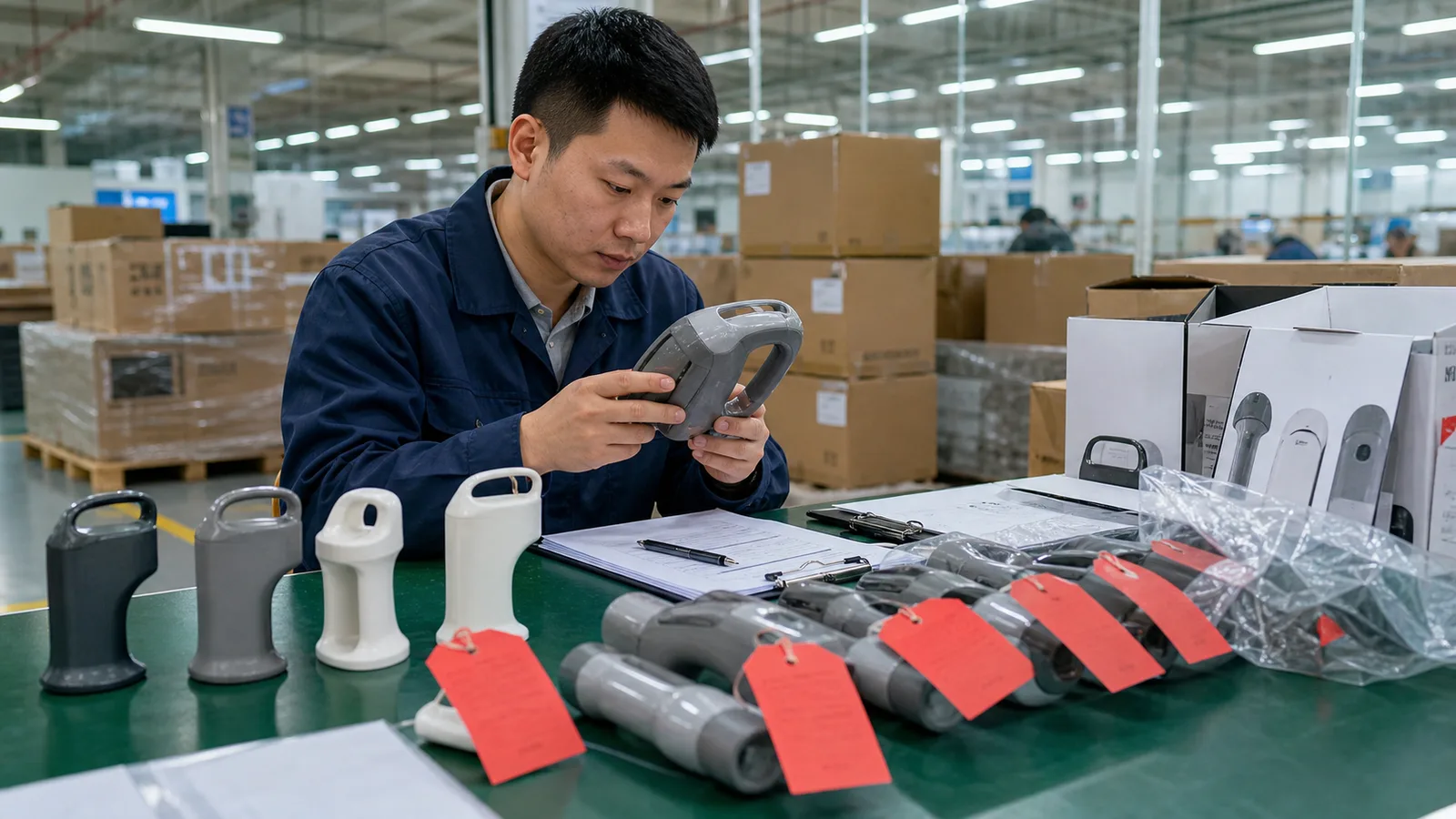
Hold automatic payment and pickup, confirm the failed checkpoints against the agreed files, and require a traceable supplier correction plan. Release only after the buyer accepts the remaining deviation or evidence verifies rework, sorting, replacement, relabeling, repacking, or re-inspection.
Hold release when
- The failure affects critical buyer requirements, repeated major defects, product function, missing parts, mixed SKUs, labels, or shipment readiness
- The supplier disputes the report without matching each failed checkpoint to evidence
- Balance payment or pickup would remove practical leverage before correction is verified
Correct and verify when
- Rework, sorting, replacement, relabeling, or repacking is practical while goods remain accessible in China
- The supplier can identify affected goods and provide a written correction method, responsible person, and completion timing
- A follow-up evidence set or re-inspection can verify the same failed checkpoints after correction
Release only when
- The buyer formally accepts the deviation, or correction evidence closes the failed points within the agreed scope
- Remaining defects and limits are understood rather than hidden behind a general supplier promise
- Payment, pickup, and shipment decisions match the residual commercial risk
Does a failed China QC inspection mean rejecting the whole order?
A failed China QC inspection means the sampled goods or checked shipment evidence did not meet the agreed acceptance criteria. It does not automatically prove every unit is defective or require full rejection. The buyer should identify what failed, how broadly it may apply, and whether correction can be verified before payment or pickup.
Failure may come from product defects, dimensions, workmanship, missing accessories, simple function checks, packaging, labels, carton marks, quantity signals, or a sampling result above an agreed limit. The report should make the failed checkpoint traceable to photos, sample records, SKU details, and the requirement used for comparison.
- Separate critical, major, and minor findings when the inspection scope uses defect classifications
- Separate product-quality failure from packaging, label, carton, quantity, or document failure
- Check whether the failure affects one sampled unit, one SKU, one lot, or a repeated pattern across the inspected sample
- Do not treat a supplier promise to fix everything as proof that correction is complete
What should the buyer do immediately after inspection fails?
The buyer should first pause any automatic release decision, read the failed checkpoints against the purchase order and approved files, and ask the supplier for a written response. The next action should name the affected goods, correction method, deadline, evidence, and whether balance payment or pickup remains on hold.
Do not negotiate from the word “failed” alone. Use the actual evidence: defect photos, sampled quantity, SKU or carton references, measurements, function results, packaging findings, and inspector notes. This keeps the supplier discussion tied to observable issues instead of turning into a general argument about whether the order is “good enough.”
- Download and preserve the original report, photos, measurements, and defect list
- Mark which failed points are commercial deal-breakers and which may be accepted by the buyer
- Ask whether affected goods can be isolated, sorted, repaired, replaced, relabeled, or repacked
- Set the evidence required before payment, pickup, or shipment release can resume
Should the supplier rework the goods and should I re-inspect?
Request supplier rework when the failed point is correctable and responsibility is commercially clear. Re-inspect when correction changes a meaningful portion of the order, cartons must be reopened, defects were repeated, or supplier photos cannot prove the same checkpoints across the affected goods. Narrow corrections may sometimes be verified with traceable evidence.
The follow-up check should not become a vague second inspection. It should reference the original failed items, the supplier correction list, affected SKU or carton range, and any new risk created by rework. Repacking, replacement, sorting, or relabeling can introduce quantity, mix-up, packaging, and shipment-readiness errors that also need confirmation.
- Use re-inspection for repeated workmanship, function, dimension, assortment, quantity, or packaging failures
- Use traceable supplier evidence only when the correction is narrow, visible, and tied to the original defect references
- Recheck carton count, SKU separation, labels, and packing condition after cartons are reopened for correction
- Keep balance payment and pickup timing aligned with verified correction, not only promised completion
What does Agent Huang see after a failed inspection?
A recurring China-side pattern is that a supplier answers a failed report with a few close-up photos and says the issue is fixed. The buyer should match each failed checkpoint, affected SKU or carton group, correction method, and corrected quantity to the report. If that traceability is missing, hold release or re-inspect instead of treating a photo folder as proof.
Another common pattern is pressure to accept a discount before the buyer understands the defect spread. A price adjustment may be a commercial option, but it does not repair function, labeling, packaging, or customer-return risk. First define the residual defect and affected goods; then decide whether acceptance, correction, replacement, or shipment delay fits the order.
- Match every correction claim to an original failed checkpoint
- Ask how corrected and uncorrected goods were separated
- Confirm whether cartons were reopened and whether packing or labels need another check
- Do not release because the pickup date is close if the evidence is still incomplete