
Quick answer
What should a buyer check before button-battery goods ship from China?
First have qualified parties confirm the applicable product, packaging, warning, testing, and certification requirements. Then compare those approved references with the exact battery, compartment, retail pack, manual, SKU, and cartons before final payment or pickup. Hold release when the rule scope or shipment match is unclear.
China-side evidence module
Button-battery release checklist
The check connects importer-approved compliance references to the physical order. A warning file or test report is weak release evidence unless the same battery, compartment, model, artwork revision, production run, and packed goods can be traced before goods leave China.
Battery and product scope
- Battery chemistry, diameter, height, model, quantity, replaceability, and whether supplied loose, included, or installed
- Product SKU, age grade, model, variation, compartment design, manual, and final U.S. listing context
Packaging and warnings
- Battery package and product-package construction, seals, approved warning content, placement, size, contrast, and legibility
- Product and instruction warnings, destination language, artwork revision, and consistency across every packaging layer
Construction and test traceability
- Compartment fastener, tool or simultaneous-action access, use-and-abuse test reference, and production-version match
- Test applicant, manufacturer, model, battery type, report date, standard citation, and material or component changes
Bulk and release evidence
- Opened-carton views, sampled SKU coverage, loose-battery control, packing-list match, and old-version segregation
- Correction instructions, affected quantities, rework records, re-check result, importer approval, and pickup hold status
Why button-battery evidence is a current China sourcing issue
CPSC’s 2026 recall record continues to show button and coin battery risks involving packaging, warnings, and product construction. On August 20, 2026, CPSC recalled about 2,798 China-made JINHEZO mini waterproof LED tea lights because children could access the coin cells and the product and packaging lacked warnings required under Reese’s Law. On August 6, the agency also recalled EEMB coin-battery chargers over accessible cells, non-child-resistant battery packaging, and missing warnings.
The sourcing decision happens before goods leave China. Importers need legal and laboratory decisions from qualified partners, but they also need evidence that the approved product, packaging, warnings, and files are the versions actually packed for shipment.
- A supplier’s generic declaration does not establish that the final battery package or product version is covered
- Warning artwork can be correct in a PDF while old or mixed versions remain in cartons
- A visual check cannot prove child resistance or use-and-abuse performance, but it can reveal traceability and version mismatches
- Payment and pickup leverage is strongest while repackaging, relabeling, sorting, or re-inspection can still happen in China
Current records: CPSC JINHEZO recall 26-713, CPSC EEMB recall 26-670, and independent LED tea-light recall coverage.
Which battery, package, and product does the rule cover?
Start by mapping the exact supply configuration. A button or coin battery may be sold by itself, included loose with a consumer product, or installed in a product. CPSC guidance distinguishes requirements for battery packaging from requirements for consumer products containing or designed to use these batteries.
Do not turn that map into a legal conclusion during inspection. The importer, qualified laboratory, compliance adviser, or counsel should confirm applicable requirements, exemptions, test methods, warning specifications, and certificate obligations. The China-side task is to compare their approved references with the order.
- Record battery chemistry, model, dimensions, count, and how the customer receives it
- Record product model, age grade, replaceability, compartment access, and all packaging layers
- Separate product-package warnings from warnings required on battery packaging, the product, and instructions
- Reconfirm scope after any battery, compartment, packaging, manual, supplier, or product revision
What physical evidence should be checked before shipment?
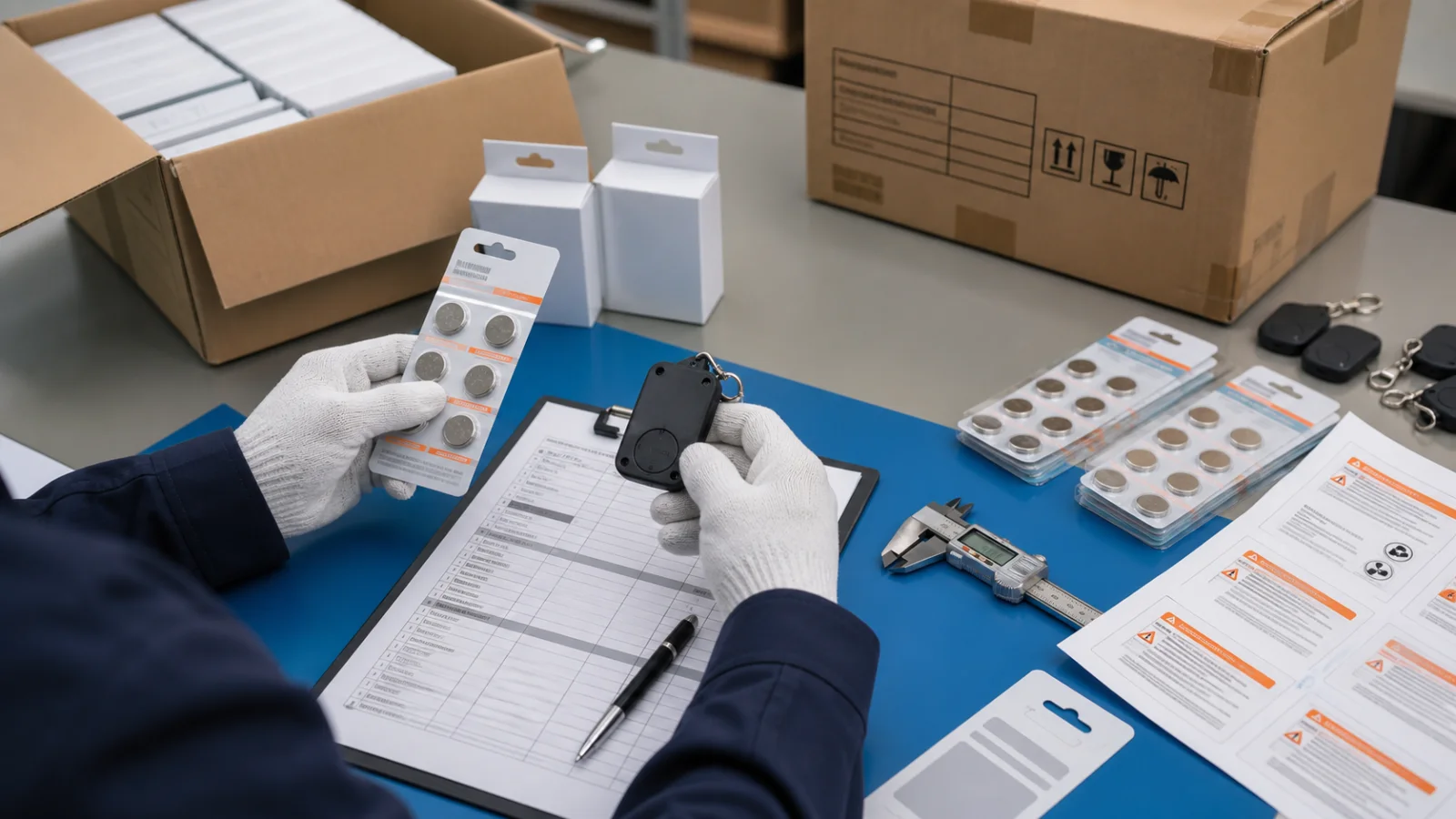
Compare buyer-approved packaging and warning files with physical retail packs across the agreed sample. Check whether warnings are present, legible, unobstructed, and on the intended surface. Trace the observed battery and compartment back to the correct SKU, carton, packing-list line, test file, and production version.
For products, document the compartment fastener and access method without claiming the construction passed mandatory performance tests. For separately supplied batteries, document packaging format and seals without claiming a visual review proves child resistance. Escalate every mismatch to the importer and qualified specialist.
- Photograph the complete package and contextual close-ups, not only a detached label sample
- Open cartons across SKUs and packing locations when the agreed sampling plan permits
- Check for loose batteries, mixed battery models, missing manuals, changed screws, old artwork, and rework residue
- Keep tested-reference photos and approved files beside final inspection evidence
What should be in the release file?
The release file should connect the compliance decision to the shipment: product and battery identifiers, approved artwork, packaging specification, test reports, certificates when required, manufacturer details, packing records, inspection evidence, corrections, and the importer’s release instruction.
If the factory changes the battery, compartment, packaging supplier, warning layout, materials, or manual after testing or approval, pause release. A specialist should decide whether the change requires new testing, revised documentation, or other action before China-side correction and re-check.
- Freeze one approved revision for product, packaging, warnings, manuals, and battery configuration
- Record who approved the compliance reference and who can authorize release
- Separate visually confirmed facts from supplier statements and specialist conclusions
- Keep correction and re-check evidence tied to affected quantities and carton locations