
Quick answer
How should an Amazon seller decide?
If final labels, cartons, SKU separation, and shipment-plan files are already proven, direct shipment may be enough. If the evidence is weak, use prep support, correction, or a re-check before pickup.
The short answer: not every Amazon seller needs China-side FBA prep
If the supplier has experience with your category, has final label files, understands the shipment plan, and can show SKU-level and carton-level evidence, the seller may not need separate FBA prep in China. A focused label or pickup check may be enough.
If the supplier evidence is thin, the order has many variants, labels changed late, or cartons are about to leave China, prep support can be cheaper than discovering the mistake after freight moves. The buyer should decide from evidence, not from the supplier saying everything is ready.
- No extra prep may be needed when files, labels, cartons, and SKU separation clearly match
- China-side prep helps when correction is still physically possible before pickup
- Destination prep may fit when goods are already overseas or need marketplace-specific local handling
- A broader QC inspection may be needed if the risk is product quality, not only FBA preparation
When FBA prep in China makes sense
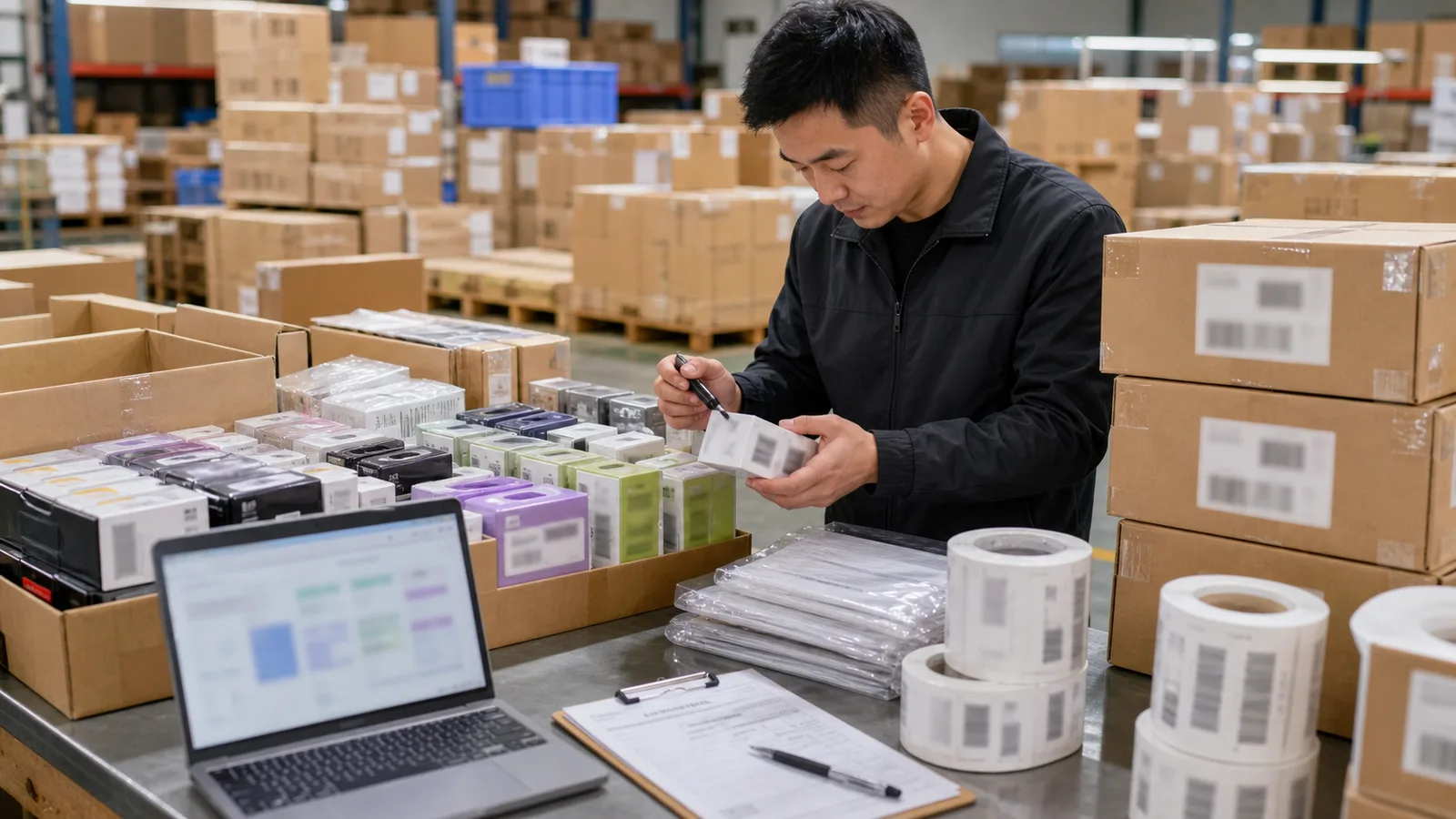
FBA prep in China makes sense when the work is visible, physical, and better corrected before the cartons leave the supplier or forwarder warehouse. That includes FNSKU labels, carton labels, SKU separation, inserts, bundle labels, poly bag warnings, set labels, and carton-level shipment evidence when relevant.
The goal is to make the pickup decision safer. If a seller can approve pickup only after labels, cartons, and SKU groups are verified, then the prep check should create photo evidence and correction notes before the forwarder collects the goods.
- FNSKU labels need to be printed, applied, checked, or corrected
- Carton labels, shipment labels, or shipping marks are missing or unclear
- Old retail barcodes, factory barcodes, or wrong labels need coverage
- Similar SKUs, colors, sizes, bundles, or multipacks need separation
- Supplier has packed cartons but cannot show enough label and SKU evidence
- Pickup is close and correction after shipment would be slower or more expensive
When supplier prep or destination prep may be enough
Supplier prep may be enough when the supplier receives final files early, labels a test batch correctly, keeps SKU groups separate, and provides broad carton-level evidence. In that case, the seller may only need a before-pickup check rather than hands-on prep support.
Destination prep may make sense when the shipment is already moving, when local marketplace handling is required after arrival, or when the seller wants a prep warehouse near the final receiving channel. The tradeoff is that obvious label and carton problems could travel overseas before correction.
- Use supplier prep when the supplier can prove correct work before pickup
- Use China-side prep when the supplier cannot handle or document the prep reliably
- Use destination prep when goods are already overseas or local marketplace work is needed
- Use a re-check when supplier corrections affect meaningful quantities, SKUs, or cartons
Agent Huang field notes on the FBA prep decision
The risky pattern is treating FBA prep as a label-printing task only. The real question is whether the final shipment can be received and processed without preventable China-side mistakes such as mixed SKUs, wrong carton labels, missing bundle labels, or old barcodes left visible.
Supplier photos are useful, but they can be too narrow. A good prep decision needs context: the SKU group, the carton, the packing list, the shipment plan, the pickup window, and what should happen if one part does not match.
- Ask for evidence by SKU group, not one generic product-label photo
- Confirm carton labels before cartons leave the supplier or forwarder warehouse
- Treat late shipment-plan or label-file changes as a re-check trigger
- Keep the decision practical: ship direct, correct, prep in China, prep at destination, or hold pickup