
Quick answer
What should be checked before FBA shipment?
Confirm who owns prep, then match current barcode and packaging instructions to the units, cartons, shipment plan, and correction evidence before goods leave China.
What changed for Amazon FBA prep in 2026?
Amazon’s official announcement says US FBA prep and item-labeling services stopped on January 1, 2026. The change covers inventory sent directly to FBA and inventory passing through Amazon Warehousing and Distribution, Amazon Global Logistics, Amazon SEND, or the Supply Chain Portal. Amazon also removed AMAZON as an accepted prepOwner or labelOwner value in US Fulfillment Inbound API operations.
Amazon’s July 7, 2026 seller guide places preparation before inbound delivery: choose the right barcode, apply readable labels, package each product securely, follow product-specific instructions, and remove or cover unintended shipping-box barcodes. The guide says inadequate preparation may lead to refusal, return, or repackaging at the seller’s expense.
- Name the party responsible for unit preparation, item labeling, shipment-box work, and corrections
- Do not use an old workflow that assumes an Amazon fulfillment center will complete missing prep
- Pull current instructions from the destination marketplace and active shipment plan for this order
- Hold pickup when responsibility, files, or correction capacity remains unclear
Verify the service change in Amazon's official FBA prep and labeling announcement and check current execution details in Amazon's July 2026 prep, packaging, and labeling guide.
What should buyers check before cartons leave China?
Start with the active Seller Central shipment plan and final seller files. Amazon can use manufacturer barcodes, Amazon barcodes, or Transparency codes in different circumstances, so “add an FNSKU” is not a universal instruction. The seller should identify the barcode route and provide the exact files and current product-specific preparation requirements.
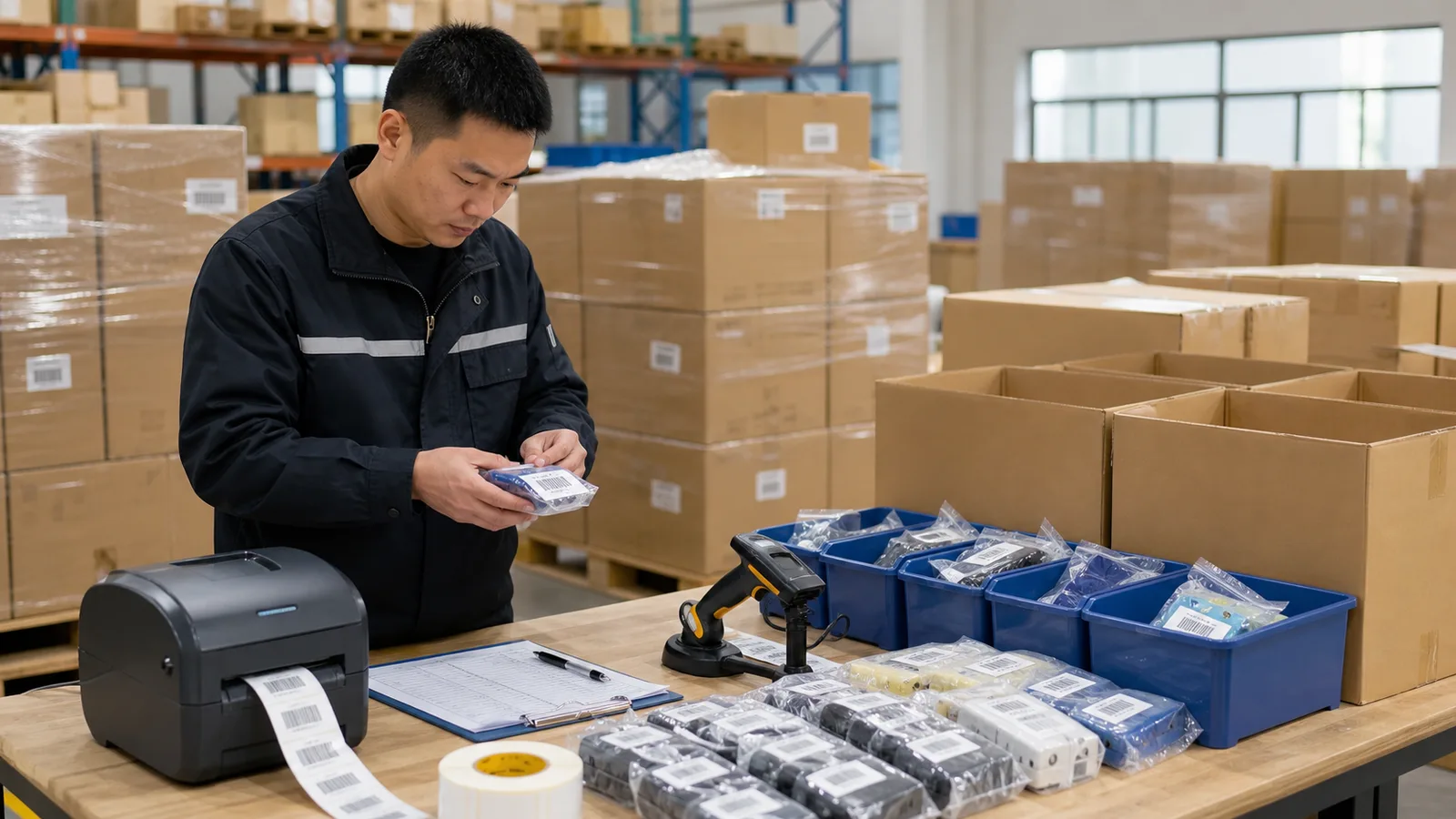
Then connect each file to physical evidence. Show the label on the correct product and outer preparation, show SKU or variation groups, count cartons and units, record shipment-box labels, and document corrections. A close-up barcode photo without product, carton, and shipment context is not enough for a release decision.
- Unit identity: ASIN, FNSKU or other approved barcode, seller SKU, variation, condition, and product title
- Label execution: correct file, legibility, placement, adhesion, outside visibility, and conflicting-barcode treatment
- Product preparation: secure packaging, loose-product control, bagging, bubble wrap, sets, sharp or fragile protection, and category instructions
- Shipment boxes: correct labels, no unintended scannable barcodes, box count, units, weight, dimensions, condition, and destination match
- Exception control: affected quantity, segregated stock, correction owner, correction photos, recount, and re-check result
How should China-side evidence support the release decision?
Set the evidence plan before the visit or warehouse check. Define which SKUs and cartons will be opened, what files are final, how barcode readability will be checked, what product-specific prep applies, and which defects require correction or a hold. Preserve photos with SKU and carton context rather than accepting unlabeled image batches.
If the order changes after checking—new label files, a different product version, repacking, a revised shipment plan, or mixed replacement stock—the earlier evidence may no longer support release. Reconcile the changed scope and re-check the affected units or cartons before pickup.
- Use a SKU-and-carton sampling or full-check plan appropriate to the order and decision
- Record both conforming evidence and exceptions; do not photograph only the best examples
- Separate corrected stock from unchecked or rejected stock and preserve the corrected count
- Release only against the current shipment plan and the responsible seller’s written instructions