
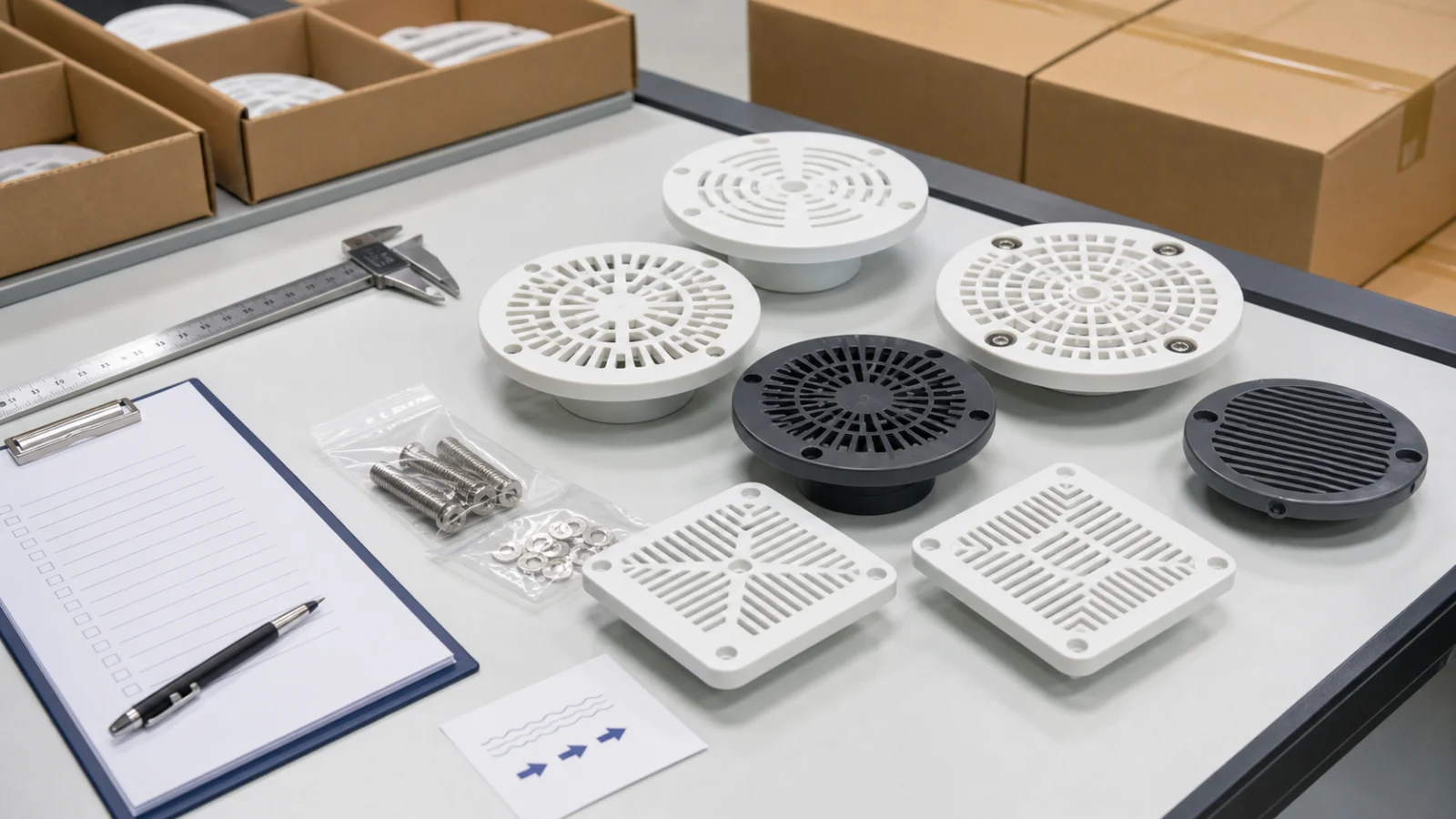
Quick answer
What should buyers check before pool drain covers leave China?
Match each exact cover model and production lot to qualified evidence, permanent product markings, approved dimensions and fasteners, installation and maintenance instructions, packaging, and carton identity. Hold package-only, unlabeled, mixed, changed, or unsupported covers instead of treating appearance as proof of VGBA compliance.
- 1Freeze the product type, exact model and SKU, cover shape, dimensions, sump interface, hole pattern, fasteners, orientation, system configuration, flow rating, service life, material, factory, date, lot, packaging, destination, and every approved change
- 2Require the importer and qualified pool-safety parties to identify the applicable CPSC rule and accepted standard version, certification route, GCC and eFiling duties, installation limits, local codes, and site-specific hydraulic decisions
- 3Match the certificate, report, certification-directory record, manufacturer, factory, model, drawings, sample photos, ratings, markings, instructions, packaging, and current production configuration
- 4Confirm that required identification and rating information is permanently present on the cover itself; do not substitute an order receipt, clear bag, retail label, or master carton for product markings
- 5Compare sampled covers with approved references for profile, openings, dimensions, fastener holes, material, molding, ribs, bosses, screws, finish, deformation, cracks, sharp edges, burrs, and visible workmanship
- 6Check installation and maintenance instructions, compatible sump or fitting information, approved fasteners, replacement timing, warnings, package claims, barcode, carton quantity, carton marks, and packing-list identity
- 7Treat flow, hair and body entrapment, structural, UV, durability, fastener, and hydraulic-system evaluations as qualified laboratory, certification, design, or installation work—not ordinary visual inspection
- 8Release only after every mismatch is quantified, affected stock is segregated, qualified retest or redesign decisions are documented, corrections remain traceable by lot and carton, and re-inspection is complete
China-side evidence module
Pool drain cover release checklist
This checklist connects technical files to sampled mass production and pack-out. It does not turn a visual inspection into certification, hydraulic design, site selection, code approval, or installation authorization.
Model and intended installation
- Exact model, SKU, product type, round or square profile, nominal and measured dimensions, sump interface, screw-hole pattern, orientation, single- or multiple-drain configuration, flow rating, service life, material, factory, date, lot, and approved revisions
- Purchase order, drawing, approved sample, bill of materials, certificate, report, product mark, manual, retail pack, carton, and packing list all identify the same production version
Qualified evidence and marking
- Applicable CPSC citation, accepted standard version, certification body, certificate or file number, manufacturer, factory, exact model, ratings, orientation, configuration, conditions, report sample photos, current status, and GCC data
- Permanent product marks show the identity and required rating information defined by the responsible compliance parties, and they remain legible after molding and finishing
Physical cover and pack-out
- Profile, openings, ribs, bosses, dimensions, hole spacing, material, molding, wall thickness where specified, fastener type, thread and length, finish, deformation, cracks, burrs, loose matter, and visible workmanship match approved references
- Instructions, warnings, compatible fitting information, replacement timing, approved hardware, retail package, barcode, claims, carton quantity, carton marks, and packing list remain consistent and readable
Hold, correction, and release
- Affected quantity, hold tags, carton map, supplier-change record, approved work instruction, replacement parts, qualified retest or certification decision, revised artwork, and repeat inspection are traceable
- Cleared and unresolved models, lots, and cartons remain separated; the final release names exact scope and open conditions rather than giving the whole order a blanket pass
Why pool drain cover release evidence matters now
On July 23, 2026, the U.S. Consumer Product Safety Commission announced separate recalls of OeyUoc and Sviyatp replacement pool drain covers made in China. Both notices say the covers violated the Virginia Graeme Baker Pool and Spa Safety Act, and both describe products that had package labels but no labeling or product identification on the cover itself.
The July actions are part of a wider 2026 pattern. CPSC has also posted recalls involving other China-made pool or spa drain covers, including Crenlux, Houoto, Muscccm, Superbobi, Earthtec, Yeeluzan, Arrogantf, and TopHomer products. Independent current recall coverage also highlighted the OeyUoc action.
These records do not prove that every China-made drain cover, supplier, factory, or order is noncompliant. They do show why buyers should not infer anti-entrapment performance from a familiar shape, two screws, an online listing, a package label, or words such as “suction fitting” without exact-model evidence.
- A package label does not replace permanent identification and rating information required on the product
- A certificate is useful only when its manufacturer, model, ratings, configuration, sample, factory, and current production scope align
- A visible flow number does not prove the tested configuration, service life, orientation, installation compatibility, or certificate status
- Correction leverage is strongest before balance payment and pickup, while remarking, replacement, retesting, segregation, re-inspection, or cancellation remains practical
Current records: CPSC OeyUoc recall, CPSC swimming-pool recall record, and independent July 2026 coverage.
Freeze the exact model, configuration, and production lot
Build one controlled model record before relying on any document. Connect the commercial SKU to the molded identity, cover profile, dimensions, openings, ribs, bosses, sump or fitting interface, screw-hole pattern, supplied fasteners, orientation, system configuration, flow rating, service life, material, instructions, factory, production date, and lot.
Do not treat appearance or diameter as a unique model identifier. Covers that look similar can have different flow ratings, hole patterns, sump-depth conditions, orientations, fasteners, expected lifetimes, or certification scope. A generic replacement claim should remain an open condition until responsible technical parties verify exact compatibility.
Use change control for the mold, resin, UV package, ribs, openings, bosses, fasteners, label artwork, manufacturer, factory, or supplier. A safety-relevant change after the certified sample should trigger a documented decision from the importer, certification body, laboratory, designer, or other qualified party before the affected lot is released.
- Photograph front, back, edge profile, every molded mark, hole pattern, supplied fasteners, label, instruction pages, retail pack, and carton marks on the approved reference
- Record first and last affected production lots and cartons for every revision
- Reject evidence for another manufacturer, factory, private-label alias, model, dimension, orientation, rating, service life, material, or product photo without a documented relationship
- Keep approved and unapproved versions physically separated through packing and pickup
What permanent markings should buyers verify?
CPSC business guidance states that pool and spa drain covers must comply with the mandatory requirements in 16 CFR part 1450. CPSC compliance materials tell inspectors to confirm an accepted standard or VGB marking, a maximum flow value in gallons per minute, and other information used to identify the approved cover and its limits.
The full marking set depends on the applicable accepted standard and certified configuration. The responsible parties should define the exact manufacturer and model identification, standard designation or certification mark, flow rating, service life, orientation, system configuration, and any other required information before inspection.
Inspect molded, etched, or otherwise permanent marks on the cover itself under practical lighting. Record legibility, completeness, location, consistency across sampled units, and alignment with the certificate and approved artwork. Do not accept a bag sticker, order receipt, loose card, or carton-only label as a silent substitute.
- Compare every sampled unit rather than photographing one convenient cover
- Check whether finishing, flash, sink, color, or mold wear makes marks unreadable
- Record conflicting flow values, model aliases, service-life statements, orientation marks, or standard designations as lot-level holds
- Do not infer certification from an invented logo, partial standard number, generic “VGB” claim, or copied mark
Compare the approved marking plan with CPSC's public pool or spa drain cover checklist and the specific certified standard scope selected by the responsible parties.
What should the certificate and report establish?
CPSC explains that manufacturers and importers of covered drain covers must issue a General Certificate of Conformity and use 16 CFR part 1450 as the applicable citation. The certificate should be based on the required testing or reasonable testing program and must identify the product and responsible parties accurately.
Review the complete evidence chain: certification body, laboratory, report or file number, standard and edition, manufacturer, factory, model, product photos, dimensions, material, flow rating, orientation, system configuration, service life, tested samples, issue date, status, limitations, and authorized use of any mark. Confirm directory records at the claimed source where available.
A certificate PDF is not a physical product check, and a physical inspection is not certification. Both are necessary but separate: the technical evidence defines the approved configuration, while inspection shows whether sampled mass production still appears to match that controlled reference.
- Reject cropped certificates, edited screenshots, supplier-written summaries, missing report pages, unexplained model families, expired or withdrawn records, and evidence that cannot be confirmed with the claimed issuer
- Do not treat an NSF/ANSI/CAN 50 record for another pool-equipment function as proof of ANSI/APSP/ICC-16 coverage for a suction fitting
- Do not treat a material, fastener, or component certificate as finished-cover certification
- Map any July 2026 CPSC eFiling record to the exact GCC and imported finished product rather than to a generic supplier file
CPSC's current pool and spa drain cover business guidance explains the rule and GCC citation. Use the China laboratory report verification guide for issuer, sample, model, and source checks.
What can a China-side inspection check?
A buyer-side inspection can compare sampled finished goods with approved drawings, samples, markings, certificate identifiers, instructions, packaging files, and carton records while the order is still accessible. The useful output is a traceable list of exact models, lots, sampled cartons, measurements, visible defects, mismatches, and affected quantities.
Check overall profile, diameter or length and width, height, hole spacing, openings, ribs, bosses, mounting faces, wall thickness where the buyer supplies a method, material and color, molding quality, cracks, deformation, sharp edges, burrs, sink, short shots, flash, contamination, and visible damage. Compare supplied screws for quantity, material claim, diameter, thread, length, head, and fit only under an approved non-installation method.
Check the manual and pack-out separately. Confirm model references, compatible fittings or sumps, approved fasteners, orientation, flow and service-life information, installation and maintenance instructions, warnings, replacement guidance, package claims, barcode, carton quantity, carton marks, and packing-list identity.
- Use buyer-approved sampling, tools, tolerances, defect definitions, and stop rules
- Photograph every mismatch with a scale, model and lot context, sample number, and carton location
- Quantify mixed, missing, changed, or unreadable marks and instructions rather than describing them as isolated cosmetic defects
- Do not install the cover in a working pool, improvise a suction test, or represent a fit check on a loose fixture as site approval
Where does shipment inspection stop?
CPSC distinguishes product compliance from the configuration of a public pool or spa. Site decisions can depend on actual pump flow, drain spacing, whether a drain can be blocked, sump geometry, piping, orientation, the cover rating, secondary anti-entrapment systems, local code, and installation and maintenance conditions.
Those decisions belong with responsible pool designers, engineers, licensed installers, operators, authorities, importers, certification bodies, and other qualified parties. A pre-shipment inspector does not know the final hydraulic system merely because the purchase order names a cover diameter or flow rating.
Huang Sourcing can organize buyer-approved evidence and compare visible production with controlled references. It does not select a cover for a pool, certify VGBA compliance, perform entrapment or hydraulic testing, approve an installation, issue a GCC, submit importer filings, or guarantee safe performance.
- Do not convert a factory sample fixture into proof of sump, pipe, pump, or field compatibility
- Do not use the sum of printed flow ratings without a qualified system review
- Do not infer remaining service life from appearance or assume an old installation can reuse new hardware
- Keep product release conditional on any unresolved professional selection, certification, code, or installation decision
The Pool & Hot Tub Alliance's ANSI/APSP/ICC-16 standard overview describes the marking, instruction, material, physical-test, and flow-rating scope; it does not replace the final site-specific review.