
Quick answer
What should a buyer check before infant neck floats ship from China?
First get a qualified scope and test decision for the exact toy. Then verify that the finished lab sample, report, CPC data, approved warnings, instructions, construction, age and weight range, lot, physical product, and cartons all describe the same production version before final payment or pickup.
China-side evidence module
Infant neck float release checklist
This module connects specialist-approved compliance references to the physical order. It does not turn an inspection into a laboratory test or product-safety certification.
Product and rule scope
- Intended use, aquatic setting, age and weight range, inflatable or non-inflatable design, neck-support function, model, SKU, lot, and U.S. sales presentation
- Qualified decision on 16 CFR 1250.5, other toy requirements, third-party testing, CPC certification, eFiling, and any excluded product category
Performance evidence
- CPSC-accepted laboratory, finished sample identity, conditioning, buoyancy, restraint-system, neck-opening, result, report date, and test-scope details
- Change control for film, foam, valve, seam, chamber, buckle, strap, attachment point, neck geometry, construction, supplier, and production location
Warnings and instructions
- Approved warning content and format on the product and packaging, plus instructions covering fit, age and weight, assembly, use, maintenance, and leak checking
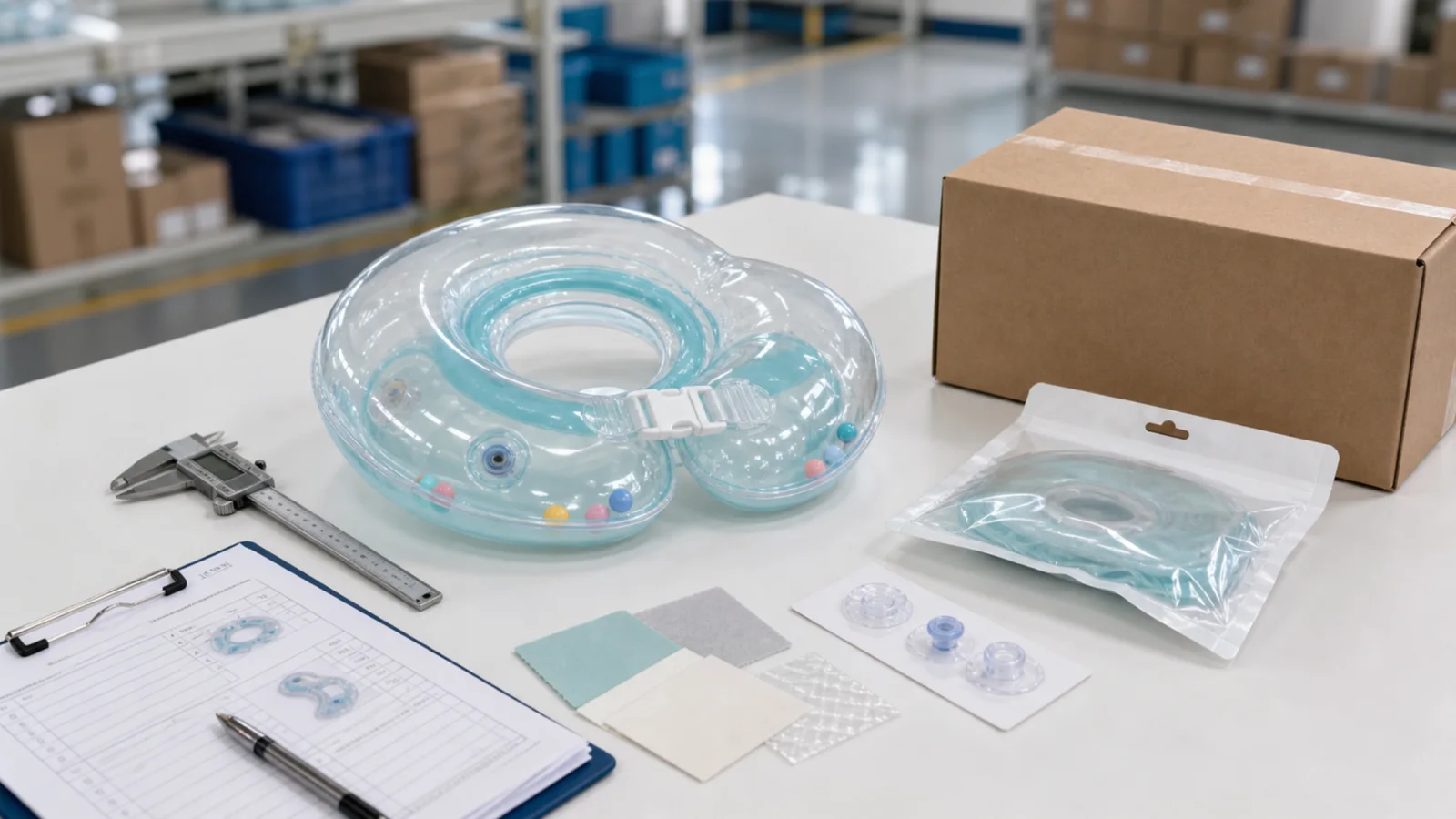
- Physical product print, label, package, manual, barcode, model, batch or date code, importer information, and artwork revision match
Bulk and release evidence
- Opened-carton coverage, sampled SKU and lot traceability, valve and restraint revision checks, mixed-version detection, packing-list match, and correction records
- Affected quantity, segregation, qualified correction instruction, re-test or re-check result, importer approval, payment hold, and pickup status
Why infant neck float evidence is a current China sourcing issue
CPSC’s first mandatory federal safety standard for neck floats took effect on June 15, 2026 and applies to products manufactured after that date. The rule adds product-specific conditioning, buoyancy, restraint-system, neck-opening, warning, and instruction requirements to the existing toy framework.
A narrow testing-and-certification extension does not postpone product compliance. CPSC’s May 2026 notice says eligible manufacturers or importers that submit a finished-product sample to the Commission may receive until August 16, 2026 for testing and certification to the new neck-float rule. All other requirements remain applicable from June 15, and other children’s-product testing and certification duties still apply.
Current attention is not limited to one U.S. rule. In June 2026, UK OPSS recalled China-origin baby neck floats sold through TikTok over drowning and other serious-harm concerns. UK law does not determine U.S. compliance, but the record is a separate current signal that product identity, design, warnings, and destination-specific evidence need to be controlled before shipment.
- A supplier statement that the float is tested or safe does not establish compliance with 16 CFR 1250.5
- A report for one valve, buckle, seam, material, neck opening, factory, or age range may not cover a changed production version
- Approved warning artwork in a PDF does not show that the required product, package, and instructions use the same final version
- Correction leverage is strongest while retesting, segregation, redesign, relabeling, cancellation, or delayed pickup remains practical in China
Current basis: CPSC June 2026 rule announcement and the UK OPSS June 2026 recall record.
Which neck float and production version are being released?
Start with the legal product definition and the actual sales configuration. The published final rule describes a neck float as an article, inflatable or not, that encircles the neck, supports the child by being secured around the neck, is used for play in water, and is intended for children up to and including four years old. CPSC separately excludes lifesaving flotation devices regulated by the U.S. Coast Guard.
The importer, qualified compliance adviser, laboratory, or counsel should decide classification and every applicable rule. The China-side evidence task is narrower: document what the factory made and packed, then compare it with the exact design, test sample, CPC, warning, instruction file, and lot the qualified parties approved.
- Record exact product name, model, SKU, intended aquatic use, recommended user age and weight, sales listing, package claims, and destination
- Record inflatable chambers or buoyant material, film or foam, seams, valves, restraint system, neck-opening geometry, attachment points, supplier, factory, production date, and lot
- Identify every size, color, material, buckle, valve, package, and model variation included in the order and how each is covered by testing
- Reconfirm scope after any design, material, component, supplier, factory, age or weight range, warning, instruction, or marketing change
Check the rule-scope distinction in the CPSC Neck Floats Business Guidance.
What performance evidence should buyers connect to the order?
The current rule covers more than a visual leak check. It includes thermal, chlorinated-saltwater, and ultraviolet conditioning before performance testing; minimum buoyancy; restraint release and integrity requirements; and a dynamic neck-opening test using specified probes and age-based conditions. These are controlled laboratory determinations.
Ask the qualified laboratory or adviser to confirm the applicable finished-product sample plan, test scope, results, and family or variation logic. Then compare report identifiers with the order: applicant, manufacturer, factory, model, recommended age and weight, construction, valves, restraint system, neck opening, materials, dates, sample photos, and production version should not drift across files.
- Verify that the laboratory is CPSC-accepted for 16 CFR 1250.5 when third-party testing to the new rule is required
- Keep the tested finished sample or controlled reference tied to the final bill of materials, approved drawings, SKU, lot, warning, instructions, and CPC data
- Escalate a changed film, foam, chamber, valve, seam, buckle, strap, attachment, neck geometry, supplier, factory, or recommended-user range before release
- Do not use a factory leak demonstration, inflation photo, caliper check, pull test, generic toy report, or supplier certificate as a substitute for the specified laboratory work
Current performance requirements: 16 CFR 1250.5 and CPSC business guidance.
How should warnings, instructions, and physical pack-out be checked?
Use importer-approved files as the reference, then inspect the complete physical sales configuration. The rule requires warnings on the neck float and packaging and requires instructional literature with the applicable warning, fit guidance, and assembly, installation, maintenance, cleaning, and use information. Inflatable products also need clear directions for checking for leaks.
Photograph each required surface in context. Open cartons across the agreed sample to look for old warnings, missing instructions, changed age or weight ranges, mixed valves or buckles, substituted models, unreadable print, inconsistent identifiers, and rework that did not reach all affected units.
- Compare warning wording, hierarchy, contrast, permanence, placement, and product or package coverage with the approved reference
- Compare the instructions, age and weight range, fit guidance, leak-check directions, model, barcode, importer details, and lot or date code with the physical float
- Trace every inspected unit and retail pack to its SKU, lot, carton, packing-list line, test report, CPC record, and artwork revision
- Repeat the agreed inspection after correction; one photo of one corrected float does not establish that the affected bulk order was corrected