
Quick answer
What should buyers check before children's sleepwear leaves China?
Match every SKU, size, color, print, trim, factory, and production lot to a documented classification, FPU/GPU evidence, qualified report, certificate data, approved measurements, permanent labels, hangtags, package claims, and carton identity. Hold generic, changed, mixed, mislabeled, out-of-tolerance, or untraceable scope.
- 1Document destination, garment type, intended use, marketing, age and size range, loose or tight fit route, fabrics, colors, prints, trims, factory, SKU, production dates, and lot before choosing evidence or labels
- 2Require the importer and qualified compliance parties to identify the applicable sleepwear, infant-garment, tight-fitting, general-apparel, testing, certification, tracking, filing, and marketplace duties
- 3Match FPU and GPU records, full laboratory reports, sample photos, fabric and garment scope, seams and trims, colors and prints, manufacturer, factory, dates, results, limits, and CPC data to the order
- 4Compare sampled mass production with the approved sample, tech pack, measurement chart, fabric, construction, seam and trim details, cuffs, openings, fit dimensions, unit identity, care labels, and tracking marks
- 5Check final marketing and pack-out: garment name, intended use, age/size, snug-fit messaging where applicable, permanent and hangtag information, barcode, SKU, polybag, quantity, carton marks, and packing list
- 6Keep flammability, chemical, color/print grouping, prototype, production, and certificate decisions with qualified parties; do not improvise burn or shrinkage conclusions from appearance
- 7Hold mixed, substituted, unlabeled, untraceable, changed, damaged, out-of-tolerance, generic-report, or unresolved scope until affected units are segregated and disposition is documented
- 8Release only named SKUs, sizes, colors, prints, lots, and cartons after controlled correction and repeat inspection; record every open condition separately
China-side evidence module
Children's sleepwear release checklist
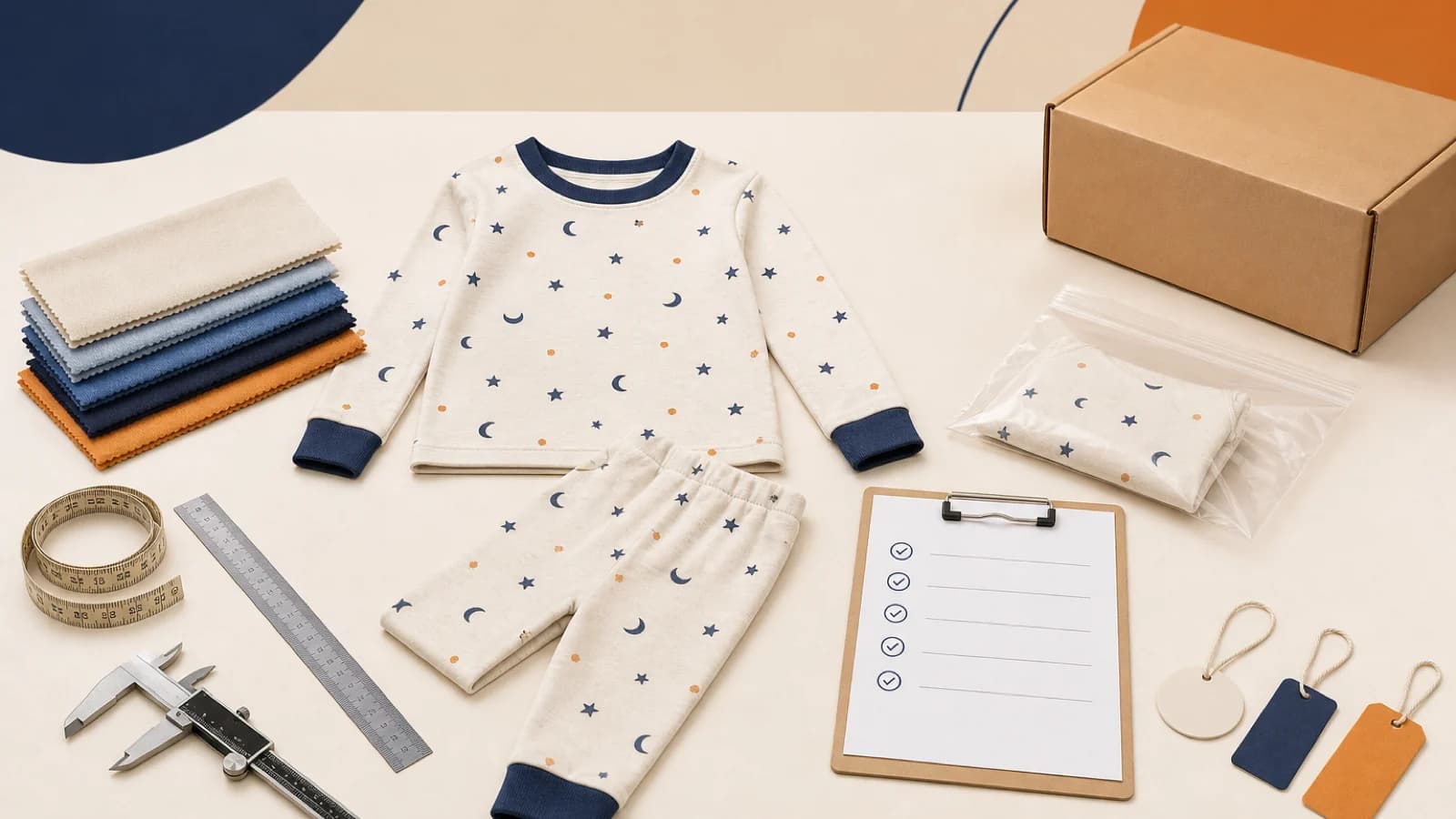
Connect qualified product and production-unit evidence to sampled mass production and pack-out. The module does not turn an onsite comparison into flammability testing, certification, legal advice, or a guarantee.
Classification and exact SKU
- Destination, intended use, marketing, age, size, loose or tight fit, garment style, fabric, print, color, trim, model, SKU, manufacturer, factory, date, and lot are controlled
- Tech pack, purchase order, approved sample, report, CPC data, product labels, hangtags, retail pack, carton, listing, and packing list describe the same finished product route
Qualified FPU/GPU evidence
- Applicable rule review, FPU/GPU identity, laboratory and acceptance scope, report number, standard, fabric and garment sample photos, seams, trims, colors, prints, dates, results, and limits align
- Certificate and eFiling data map to the exact imported finished product rather than an earlier sample, raw fabric alone, another factory, a generic family, or a differently marketed garment
Physical product and pack-out
- Sampled garments match approved measurements, fit construction, cuffs, openings, seams, stitches, trims, decorations, fabric hand, color, print, workmanship, unit identity, and visible care information
- Permanent labels, required hangtags, tracking marks, warnings or instructions, age/size, barcode, SKU, lot, retail package, quantity, carton marks, and packing list are complete and consistent
Hold, correction, and release
- Affected quantity, hold tags, carton map, supplier change, correction instruction, qualified retest or certificate disposition, revised files, and repeat inspection are traceable
- Cleared and unresolved SKUs, sizes, colors, prints, lots, and cartons remain separated; the final release names exact scope and open conditions instead of giving the order a blanket pass
Why children's sleepwear shipment evidence matters now
On June 18, 2026, the U.S. Consumer Product Safety Commission warned consumers to stop using Michley children's pajamas. The notice says the garments violated the mandatory flammability standard, identifies the seller as a China company, states that the product was manufactured in China, and reports no incidents or injuries.
Health Canada published a recall for Michley pajamas on July 21, 2026. That notice separately identifies a flammability hazard, reports 66 affected units sold in Canada and no reported incidents or injuries there as of July 16, and names China as the place of origin.
A separate operational change also reached its effective date: CPSC states that revised certificate requirements and electronic filing of certificate data for general imported regulated products took effect July 8, 2026. These records make exact finished-product identity, testing, traceability, and certificate data more useful before a shipment reaches entry.
- Repeated public actions do not prove every pajama, supplier, factory, fabric, or lot has the same problem
- A garment name or “loungewear” label does not by itself settle which rule applies
- A genuine report is relevant only when its samples and production-unit scope align with the shipped goods
- Correction leverage is strongest before balance payment and pickup, while retesting, relabeling, rework, segregation, or cancellation remains practical
Current primary records: CPSC Michley warning, Health Canada Michley recall, and the CPSC certificate and eFiling update.
Classify the garment before choosing tests, fit, or labels
Start with intended use, design, construction, age and size, marketing, listing, packaging, merchandising, fabric features, and how buyers are likely to use the garment. CPSC's current FAQ says sleepwear can include pajamas, nightgowns, robes, and loungewear, and that classification depends on more than the product name.
CPSC distinguishes in-scope sleepwear from diapers, underwear, defined infant garments, and defined tight-fitting garments. Those excepted garments remain subject to other flammability requirements. The responsible importer and qualified compliance resources should document the route before the supplier freezes the pattern, fabric, tests, tags, and packaging.
Do not solve uncertainty by adding “daywear,” “loungewear,” an age, or a snug-fit tag after production. Marketing and physical construction must tell the same story, and a visual inspector should compare against an approved classification and measurement file rather than make the legal classification onsite.
- Freeze product names and intended-use claims across purchase order, tech pack, listing, package, hangtag, and instructions
- Control every size against the approved measurement route instead of approving one representative size for all
- Escalate robes, loungewear, sleeping bags, infant sizes, and borderline daywear for documented qualified review
- Treat U.S., Canadian, EU, UK, and other market requirements as separate reviews unless qualified evidence establishes the destination scope
Review the route with the current CPSC children's sleepwear guidance and qualified compliance parties; this guide is not a substitute for the regulations, incorporated standards, or legal advice.
Connect FPU and GPU evidence to the production lot
CPSC's current sleepwear FAQ describes Fabric Production Unit testing for pre-production fabric and Garment Production Unit testing for prototypes and production. It states that an FPU can cover up to 5,000 yards of finished fabric and a GPU up to 500 dozen finished garments, subject to the standards and grouping rules.
Build a controlled map from every shipped SKU, size, color, print, fabric lot, seam, trim, decoration, factory, production date, and carton range to the applicable FPU/GPU evidence. Ask qualified parties to document whether colors, prints, trims, or model families can be grouped; do not infer coverage from visual similarity.
When fabric, print, trim, seam, pattern, factory, or treatment changes, identify the first affected production and hold it until the responsible party decides whether the original evidence remains applicable, additional samples are required, or correction and retesting are needed.
- Preserve fabric-roll, cutting, sewing, finishing, SKU, lot, and carton traceability
- Keep approved and unapproved production physically separated through packing and pickup
- Map test samples and retained samples to the same production identity used on product labels and certificates
- Reject undocumented substitutions even when fabric content, color, or garment appearance seems similar
What should reports and certificate data establish?
Review the complete evidence chain: responsible manufacturer or importer, applicable rules, issuing laboratory, CPSC acceptance where required, report number, test method, garment and fabric sample photos, FPU/GPU identity, factory, SKU, sizes, materials, colors, prints, seams, trims, receipt and test dates, results, limitations, and authorized certificate data.
CPSC states that children's products generally require third-party testing by a CPSC-accepted laboratory for applicable rules and a Children's Product Certificate issued by the domestic manufacturer or importer. The importer remains responsible for accurate product and certificate information; a supplier-created PDF does not transfer that duty.
Compare the tested samples and production units with current goods before relying on a pass. A real report for an earlier fabric lot, another print or trim, different fit route, another factory, or generic garment family does not prove that the shipment matches its scope.
- Obtain complete reports and production-unit records rather than a certificate cover, screenshot, or supplier summary
- Verify the laboratory and report through independently obtained source details where possible
- Map every result and limitation to the exact destination, route, SKU, size, fabric, print, trim, factory, and lot
- Escalate missing pages, altered sample photos, inconsistent dates, unexplained grouping, and files that cannot be confirmed
Use the China laboratory report verification guide for issuer, scope, sample, model, date, result, limitation, and source checks.
What can a China-side finished-goods inspection check?
A buyer-side inspection can compare sampled finished garments with approved tech packs, patterns or measurement charts, samples, fabric and trim specifications, report identifiers, labels, packaging files, and carton records while the order is accessible. The useful output is a traceable list of sampled SKUs, sizes, measurements, construction details, defects, mismatches, and affected quantities.
Check identity, fabric and visible finish, print and color, seam and stitch workmanship, trims and decorations, cuffs, neck and leg openings, closures, sharp or detached parts, contamination, odor if buyer-defined, measurements, fit tolerances, permanent labels, hangtags, retail packaging, quantities, and carton alignment.
Do not improvise burn, chemical, wash, conditioning, prototype, production-unit, or legal-fit conclusions. Those decisions require the applicable methods, calibrated equipment, controlled samples, trained personnel, and responsible disposition. Onsite evidence can identify a reason to hold or retest; it cannot issue a compliance verdict.
- Use buyer-approved sampling, measurement methods, tolerances, defect classes, tools, and stop rules
- Photograph each measured size, mismatch, sample number, SKU, lot, label, package, and carton context
- Quantify mixed fabrics, construction, trims, labels, or measurements rather than describing them as cosmetic issues
- Keep any laboratory sample plan separate from ordinary saleable-stock inspection
Check permanent labels, hangtags, claims, and traceability
CPSC guidance identifies unit information connecting in-scope sleepwear to an FPU or GPU, care precautions where applicable, and tracking information for children’s products on the product and packaging. Tight-fitting and infant-garment routes have their own defined measurement, tagging, sizing, labeling, and other requirements.
Compare final sewn-in labels, hangtags, age and size statements, fiber and care information, manufacturer or private-label identity, production location and date, batch or run, retail claims, barcodes, SKU, polybag, carton quantity, carton marks, and packing list with approved artwork and responsible-party instructions.
Inspect legibility, permanence where required, placement, completeness, and consistency across sampled units. A tag cannot cure wrong classification, unsupported fit, failed testing, changed production, or missing lot evidence. Mixed or missing traceability should remain a release issue until controlled correction is verified.
- Do not let an unsupported “snug fitting,” “daywear,” “loungewear,” or infant-size claim act as a label workaround
- Match online and packaging claims to the same intended use and age assumptions used for the compliance route
- Check product labels and package tracking separately rather than photographing one convenient carton
- Require revised artwork, controlled rework, affected-quantity records, and repeat inspection after corrections